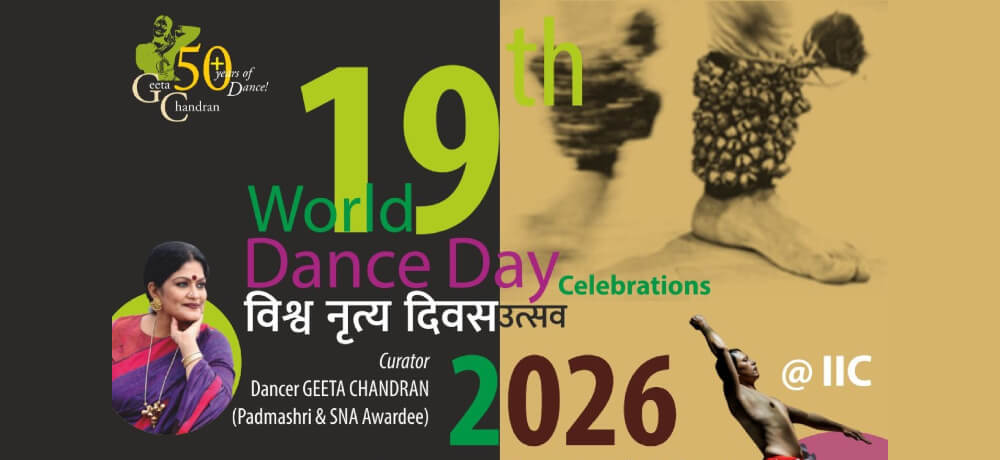
Just ahead of World Dance Day on April 29, Natya Vriksha’s 19th edition of its annual celebrations wrapped up in New Delhi with a format that stayed rooted in classical performances while opening space for quieter conversations around change.
Held on April 25 and 26 at the India International Centre (IIC), the programme did not attempt to turn into a high-energy cultural showcase. It moved with restraint and gave equal importance to process, pedagogy and performance. Curated by dancer Geeta Chandran, the festival brought together workshops, lecture-demonstrations and recitals, anchored in classical forms.
Each morning opened with the Yangshak Movement workshop led by Surjit Nongmeikapam. Across both days, the sessions introduced participants to a movement vocabulary shaped by Manipuri martial and dance traditions. The focus stayed on the body as a site of discipline and inquiry, with attention to breath, momentum and internal alignment rather than presentation.

Afternoon segments added context with ‘Pravāhitā’, presented by Dr. Sucheta Bhide Chapekar with Arundhati and Sagarika Patwardhan, exploring lineage through practice, as it brought three generations into a shared performance space.
Evening performances, grouped under the Young Dancers Festival, kept the curation straightforward. Bharatanatyam, Kathak, Odissi and Kuchipudi recitals unfolded across both days, with artists from different cities and walks of life sharing the same stage.
On the second day, a panel on “AI & Dance: Challenges and Opportunities,” led by Dr. Anita Ratnam, introduced a contemporary layer. It acknowledged an ongoing shift in the arts without pulling focus away from the rest of the programme.


What stands out in retrospect is not a single performance or segment, but the way the festival held its ground without overstating its presence. It did not push for scale or spectacle. Instead, it stayed accessible, allowing audiences to engage on their own terms.
“I only managed to catch the last couple of presentations on the opening day, but it was a rewarding experience,” said Obaid Niazi, photographer and broadcaster. “There’s something very grounding about being in a space like this — even if you’re not deeply connected to dance. The performances had a certain sincerity, and the overall atmosphere felt calm and unpretentious. It’s the kind of event you can step into briefly and still come away with something.”
His response reflects a larger takeaway on how the festival did not position itself as a defining statement on dance in the city. It worked as a steady platform that brings practitioners, learners and audiences into the same space without hierarchy.
As the calendar turns to World Dance Day, the formats like this continue to matter, not because they attempt to reframe the art form, but they continue to support it in ways that feels sustainable, open and grounded in practice.
(Images and Quote: Courtesy of Obaid Niazi)
Join the conversation around World Dance Day and the spaces shaping it on X and Instagram, and for more cultural coverage, visit Lyrical Muse.


Leave a Reply