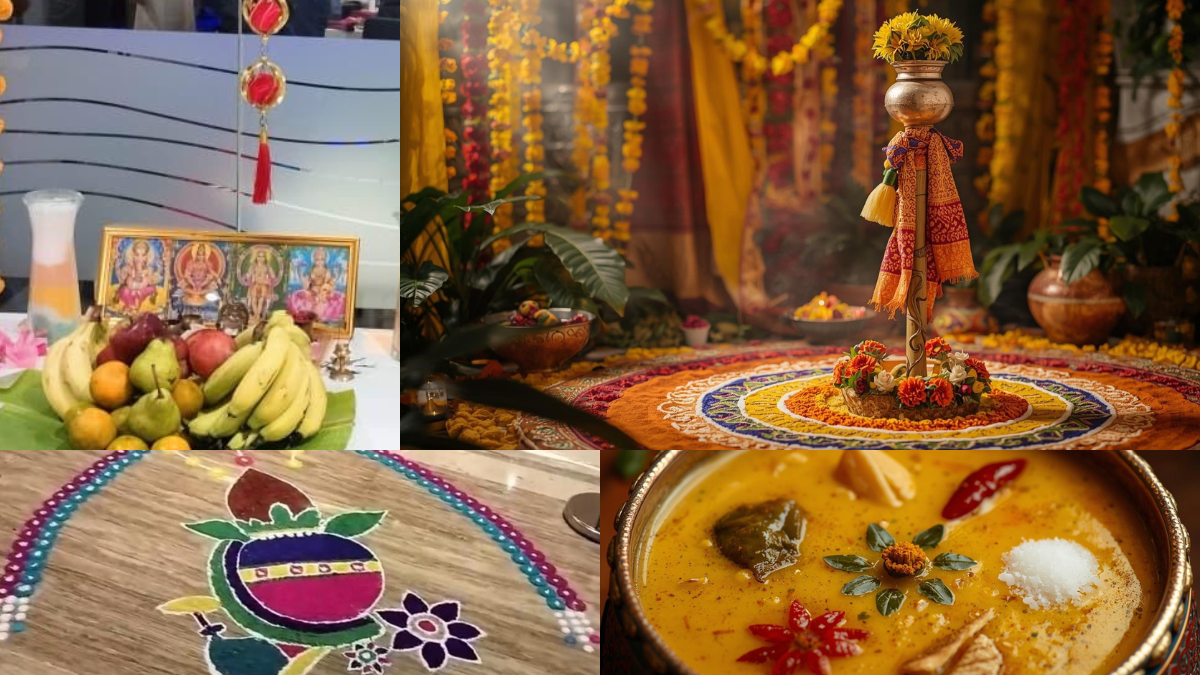
As spring settles in and the first flush of the harvest season arrives, communities across India mark the beginning of a new year with two culturally rich festivals: Gudi Padwa in the west and Ugadi in the south.
Celebrated this year on March 19, 2026, both festivals coincide with the first day of the Chaitra month in the Hindu lunisolar calendar, symbolising renewal, prosperity and the quiet optimism of new beginnings.
What do Gudi Padwa and Ugadi signify?
Rooted in ancient Hindu tradition, both festivals are believed to mark the day when Lord Brahma created the universe and time itself. They also align with the arrival of spring and the start of a new agricultural cycle, making them deeply tied to both cosmology and the rhythms of everyday life.

While Gudi Padwa is widely celebrated in Maharashtra and Goa, Ugadi (or Yugadi) is observed in Andhra Pradesh, Telangana and Karnataka. Despite regional variations, the essence remains shared: a conscious pause to reset, reflect and begin again.

How is Gudi Padwa celebrated?
In Maharashtrian homes, the festival is visually defined by the Gudi — a vibrant victory flag made of silk cloth, neem and mango leaves, and topped with an inverted metal pot. Hoisted outside homes, it is believed to invite prosperity and ward off negativity.


The day begins early with ritual cleansing, rangoli decorations and the preparation of festive foods like puran poli and basundi. A symbolic mixture of neem leaves and jaggery is consumed, embodying the acceptance of life’s bittersweet nature.
For many, the festival is deeply personal and evolving. As Saanika Natu, a Pune native now based in Heidelberg, reflects:
“Gudi Padwa filled the house with that particular energy — the smell of possibilities. Today, living abroad, I try to recreate every ritual… but I’d be lying if I said I didn’t feel the distance. And yet, carrying my culture myself has become its own kind of love.”

Another voice of Sakshi Kulkarni captures the festival’s emotional continuity across generations:
“सोनेरी सूर्याची सोनेरी किरणे… गुढीपाडव्याच्या निमित्ताने तुमच्या आयुष्यात येवो सुवर्णकाळ,” a traditional greeting often shared within families, loosely translating to a wish for a “golden era” filled with prosperity and happiness in the year ahead.
For younger celebrants like Tanya, the festival remains both nostalgic and grounding: “Gudi Padwa has always meant the start of the Hindu New Year — a sense of victory, renewal and resilience. We would wake up early, help with preparations, and eat neem and jaggery first thing… it was a way of learning acceptance from the very beginning.”
What makes Ugadi unique?
Further south, Ugadi carries its own distinctive rituals, most notably the preparation of Ugadi Pachadi — a traditional dish that blends six flavours: sweet, sour, bitter, spicy, tangy and salty. Each element symbolises a different emotional experience, serving as a philosophical reminder of life’s complexity.

Rupa, a Telugu homemaker based in Chennai, explains:
“One of the most important elements of Ugadi is the pachadi (a traditional South Indian condiment or chutney) which contains all elements ; sweetness, sourness, bitterness, spiciness, salty. With Ugadi marking Telugu New Year, this pachadi signifies that life with bits of everything and we ought to accept life with all elements that it comes with.
Other traditional food includes boli and vada payasam – all offered to God first and then enjoyed as a feast. Of course, we also seek blessings of our elders.”

The day begins with an oil bath (Abhyanga Snanam), followed by prayers, temple visits and the listening of Panchanga Shravanam—an annual astrological forecast. Homes are decorated with mango leaf torans and intricate rangoli (muggulu), while families come together over elaborate meals featuring dishes like pulihora and holige.
A shared spirit of new beginnings
Despite their regional identities, Gudi Padwa and Ugadi converge in meaning. Both festivals encourage people to embrace life in its entirety – joy and sorrow, success and uncertainty with grace. They are also considered auspicious moments to begin new ventures, make investments and set intentions for the year ahead. More than ritual, they offer a cultural framework for resilience and hope.
In a rapidly modernising world, these traditions continue to evolve, sometimes quieter, sometimes grander, but always rooted in the same idea: that every new year is not just marked by time, but by the intention we bring into it.
(Image Credits: Courtesy of Saanika Natu, Grand Kakinada by GRT Hotels with additional illustrations via Canva AI)
Share your thoughts and personal traditions with us on X: how are you celebrating this new year? For more culture-led stories and features, visit Lyrical Muse.


Leave a Reply