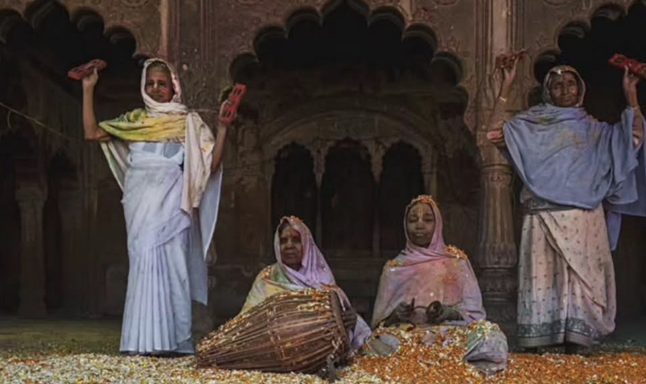
As communities across India welcome a bright day of colours, joy and love on Holi with traditions and rituals of their own – one celebration stands out as a symbol of dignity and empowerment.
Here’s everything you need to know about Widow Holi.
What is Widow Holi?
Widow Holi, sees widows come together to celebrate Holi with vibrant colours and flower petals.
Held annually the iconic Gopinath Temple in Vrindavan, the event is a quiet yet mighty celebration that shatters India’s societal confines to reclaim joy and a sense of self.
Why is Widow Holi important?
From expectations throughout Indian history that placed widows in isolation away from festivities and disallowed them from donning bright colours or joining public celebrations to powerful moments of enjoying traditional Holi rituals – Widow Holi is a not just a festival, it’s a movement steeped in emotional healing, celebration and inclusion.
The celebrations – which took place on March 2 this year – has transformed the lives of many marginalised women in Vrindavan’s ashrams by bringing back the vivid liberation of festivities into their lives.
What is the history of Widow Holi?
Beginning as a small initiative by social groups, Widow Holi is now a powerful yearly event that challenges stigma and breaks taboo to restore identity and confidence by bending rigid traditions with the warmth of compassion.
(Featured Image Source : IG thebharatpost_)
Have you heard of Widow Holi? Let us know! Visit Lyrical Muse for more culture stories.


Leave a Reply