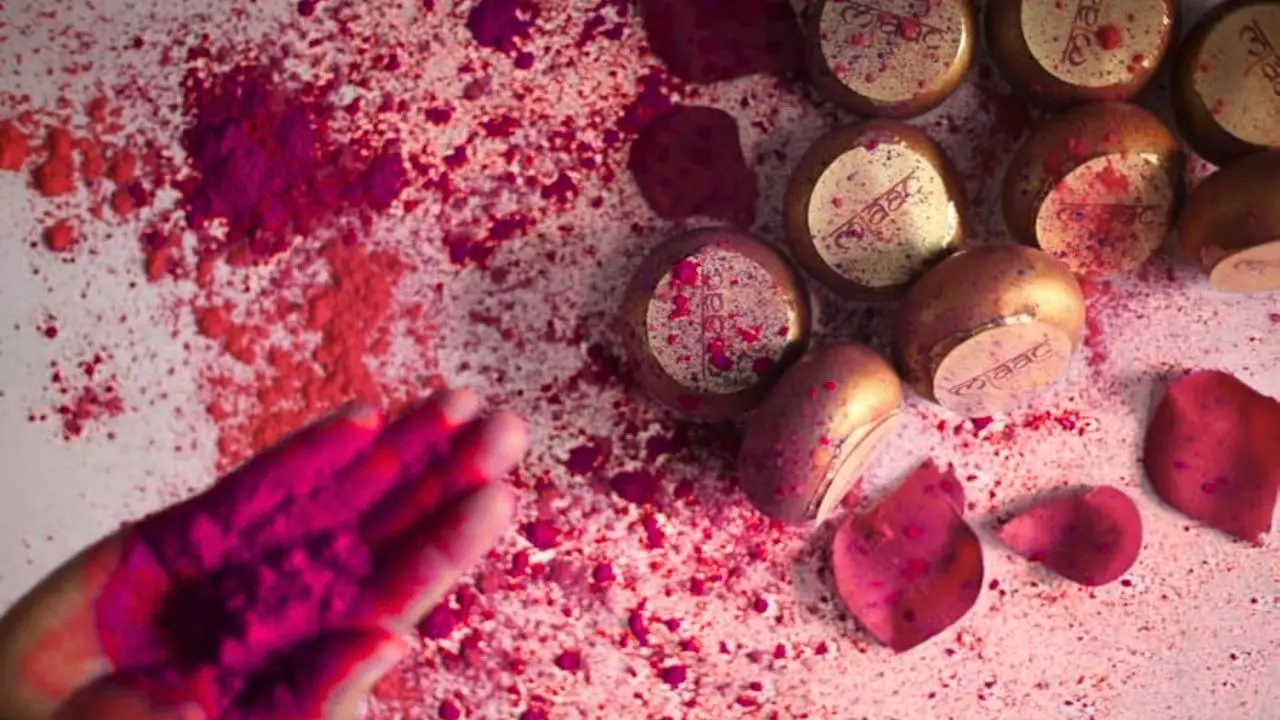
As India prepares to celebrate Holi today, with Holika Dahan marking the eve of the festival, colours once again take centre stage across the country. From water balloons to clouds of powdered gulaal, every region has its own way of welcoming spring.
But in the historic city of Jaipur, a centuries-old tradition continues to colour the festival in a uniquely royal way — the delicate art of the Gulaal Gota. In recent years, videos of these fragile colour balls bursting into vibrant powder have gone viral online, introducing a wider audience to a ritual that dates back nearly four centuries.
What is Gulaal Gota?
A Gulaal Gota is a small, hollow ball crafted from lac and filled with dry herbal gulaal powder. Weighing roughly around 20-30 grams, the fragile shell shatters on impact when tossed during Holi celebrations, releasing a dramatic burst of colour into the air.
Unlike modern water balloons, the Gulaal Gota uses only dry colour and natural materials. Its lightweight design allows it to break instantly without causing harm, turning each throw into a fleeting explosion of festive colour. The outer shell comes from lac, a natural resin produced by scale insects. For centuries, artisans have used this material to craft traditional lac bangles, jewellery, and decorative items across Rajasthan.
How are Gulaal Gotas made?
The craft behind a Gulaal Gota requires remarkable precision and patience. Artisans begin by heating lac in boiling water until it softens and becomes flexible. While still warm, they shape the material into thin hollow shells using a traditional blowing pipe known as a phunkni. The shell is cooled in water so it hardens while retaining its delicate form.
Each hollow sphere is then carefully filled with dry gulaal powder by hand. Finally, artisans seal the opening with colourful paper cuttings to ensure the ball bursts easily when thrown. The process resembles the technique used to make lac bangles, but it is far more delicate. Handling molten lac often leaves artisans with bruised hands, making the craft physically demanding despite the tiny size of the final product.
What is the history behind this Royal Holi Tradition?
The Gulaal Gota traces its origins to the royal courts of Jaipur nearly 300–400 years ago. The city itself was founded in 1727 by Sawai Jai Singh II, and the royal family popularised this elegant way of playing Holi.
Historical accounts describe kings riding through the city on elephants during the festival, tossing Gulaal Gotas into crowds gathered in celebration. What began as a royal pastime eventually became a cherished public tradition.
Today, the craft survives largely thanks to Muslim lac artisans from the Manihaar community. Their workshops are concentrated in Tripolia Bazaar, particularly in a narrow lane known as Manihaaron ka Raasta, where lac bangles, jewellery and Gulaal Gotas continue to be handmade.
Why is Gulaal Gota going viral today?
In the past decade, social media has helped revive interest in this historic craft. Videos showing artisans shaping molten lac or colourful Gulaal Gotas bursting mid-air have captivated viewers across Instagram, YouTube and X. Demand now arrives from across India and even overseas. With each piece handmade and production limited, orders often surge weeks before Holi.
Beyond its visual charm, the tradition represents something deeper: Jaipur’s shared cultural heritage. Generations of Muslim artisans have preserved a craft closely tied to a Hindu festival, reflecting the region’s long-standing spirit of cultural harmony.
In a festival known for colour and chaos, Gulaal Gota quietly reminds us that some of India’s most joyful traditions are also its most carefully preserved.
What do you think about Jaipur’s centuries-old Gulaal Gota tradition? Share your thoughts with us on X and Instagram, and explore more culture stories on Lyrical Muse.


Leave a Reply