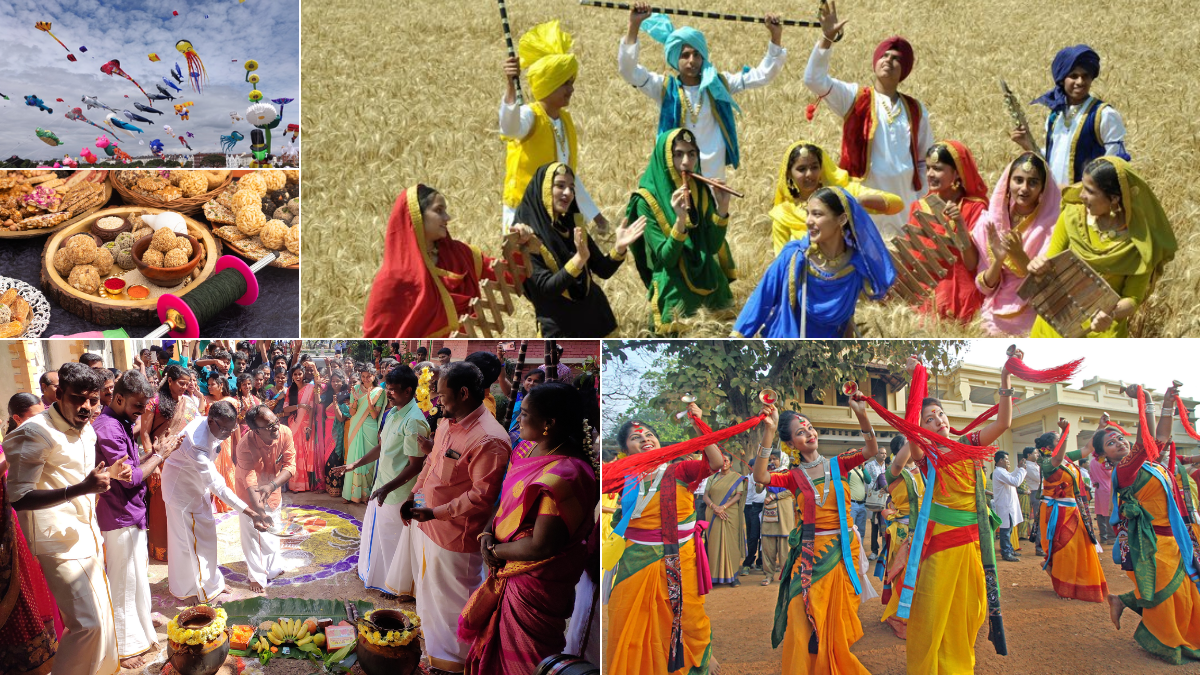
Mid-January marks a turning point in India’s agrarian calendar. As the Sun begins its northward journey, communities across regions celebrate the harvest under different names, each shaped by local culture, food and belief.
From bonfires in the north to temple rituals in the south, these festivals share a common thread: gratitude for the land and those who sustain it.
Lohri (Punjab and Haryana)
In Punjab and parts of Haryana, Lohri signals the closing phase of winter. Celebrated on the night of 13 January, it centres on bonfires that bring neighbourhoods together. People circle the flames, offering sesame seeds, peanuts and sweets while marking the transition toward the harvest season.
The festival also carries strong folk roots. Songs recall Dulla Bhatti, a figure associated with resistance and generosity. Families often mark Lohri as a milestone moment, especially for newlyweds and newborns, giving the festival a deeply personal dimension.
Maghi (Punjab)
Observed a day after Lohri in Punjab, Maghi focuses on ritual bathing and remembrance. Devotees visit rivers at dawn and light lamps as part of their prayers.
Large gatherings take place at Sri Muktsar Sahib, where a mela commemorates an important moment in Sikh history. The day blends faith, history and public participation.
Uttarayan (Gujarat)
In Gujarat, Makar Sankranti takes the form of Uttarayan, best known for its large-scale kite flying. Cities like Ahmedabad and Surat see rooftops fill with people from morning to evening, turning the sky into a competitive, colourful spectacle.
The festival also draws international attention through the International Kite Festival. Alongside the visual display, households prepare seasonal dishes such as undhiyu and chikki, balancing celebration with tradition.
Magh Bihu or Bhogali Bihu (Assam)
In Assam, Magh Bihu, also called Bhogali Bihu, marks the end of the harvest with community feasting. The celebrations begin with Uruka, when families and neighbours gather for large shared meals prepared outdoors.
Temporary bamboo structures, known as mejis and bhelaghars, serve as gathering spaces before they are burned the next morning. The ritual reflects closure and renewal, while traditional foods made from rice and jaggery anchor the festival in local produce.
Pongal (Tamil Nadu)
In Tamil Nadu, Pongal unfolds over several days, combining ritual, food and community life. The main day features the preparation of the Pongal dish, where rice, milk and jaggery are boiled until they overflow, symbolising abundance.
Each day carries a focus, from household renewal to honouring cattle and strengthening social ties. The festival aligns with Makar Sankranti and reflects a structured, multi-day approach to harvest celebrations.
Poush Sankranti (West Bengal, Tripura, Bangladesh)
In West Bengal and Tripura, along with Bangladesh, Poush Sankranti marks the end of the winter harvest cycle. Known as Poush Parbon, it focuses on seasonal food traditions and household rituals.
Kitchens take centre stage with the making of pithes using rice flour, coconut and date palm jaggery. The festival also draws pilgrims to Ganga Sagar for the annual Gangasagar Mela, where ritual bathing forms a key practice.
Makara Sankranti (Odisha)
In Odisha, the festival highlights temple worship and food offerings. People prepare makara chaula using newly harvested ingredients and present it to deities. At the Konark Sun Temple, devotees gather to honour the Sun. Ritual bathing and local fairs across districts connect religious practice with seasonal change.
Suggi (Karnataka)
In Karnataka, the harvest festival is known as Suggi. Families exchange ellu-bella, a mix of sesame, jaggery and coconut, as a gesture of goodwill. Visits between relatives and structured exchange rituals shape the day. The festival places emphasis on maintaining relationships through simple, repeated customs.
Uttrain (Jammu)
In the Jammu region, the festival follows Lohri and marks the start of a new solar phase. Families prepare khichdi and share it within extended households. Ritual bathing at sites like the Devika River and local fairs define the public aspect, while charity remains a consistent practice.
Khichdi (Uttar Pradesh)
Across Uttar Pradesh, the festival is often called Khichdi. Large numbers of people gather at Prayagraj and Varanasi for ritual bathing in rivers. At home, families offer prayers to the rising Sun and share simple foods like sesame and rice-based dishes. Charity and gifting remain central to the observance.
Uttarayani (Uttarakhand)
In Uttarakhand, Uttarayani combines ritual bathing with large public fairs. Towns such as Bageshwar host the Uttarayani Fair, drawing pilgrims and traders. People visit temples like Bagnath Temple and donate food and essentials, reinforcing the link between faith and social responsibility.
Sankranti (Maharashtra, Rajasthan)
In Maharashtra, people exchange til-gul sweets and visit friends and relatives, using the occasion to reinforce social ties. Gatherings such as haldi-kunku remain an important part of the day. In Rajasthan, kite flying dominates the celebration. Cities like Jaipur see widespread participation, alongside festive foods like ghevar and gajak.
Beyond India
In Nepal, Maghe Sankranti marks the start of the month of Magha, with ritual bathing in rivers and the distribution of seasonal foods. In Bangladesh, Shakrain features kite flying, fireworks and community competitions centred on food.
Tamil communities in Sri Lanka, Malaysia and Singapore continue to celebrate Pongal with similar rituals, adapting the festival to local contexts while retaining its core meaning.
Know a regional Makar Sankranti tradition we missed? Share it with us on X and Instagram, and visit Lyrical Muse for more culture-led stories.


Leave a Reply