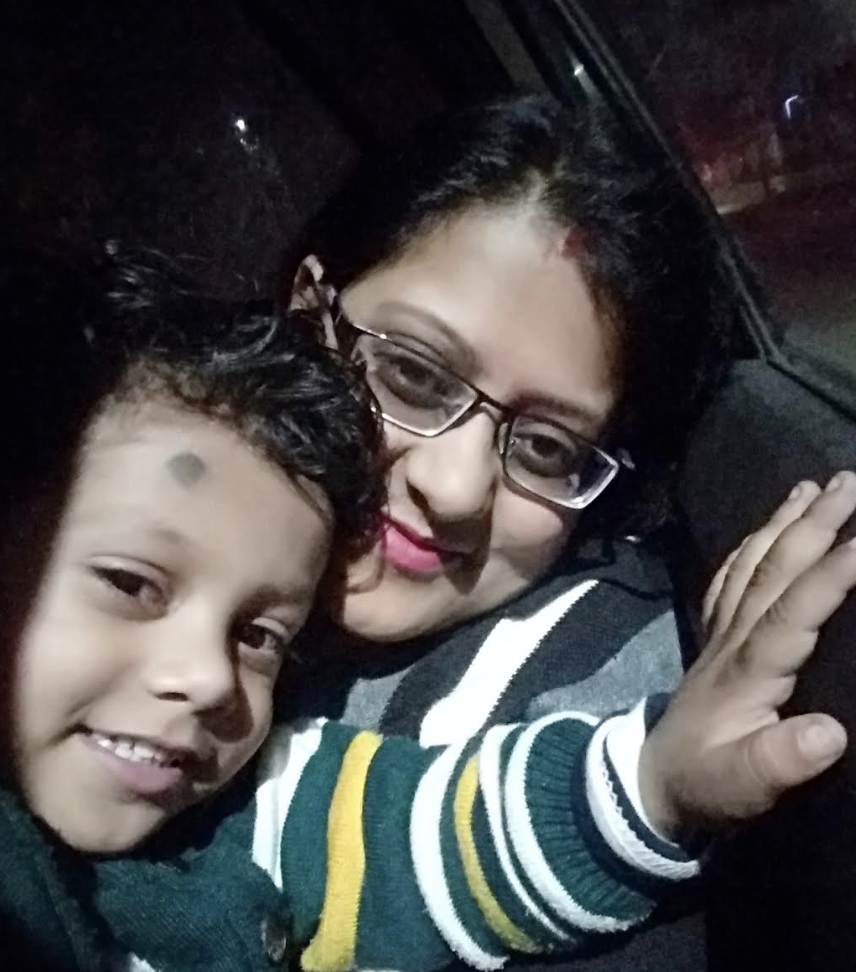
The fourth essay in our Disability Pride Month series comes from Neha Rai Thakur, a Kolkata-based mom who writes about caring for her young son Atharv who lives with severe Haemophilia A. Her essay dives into the unseen side of caregiving with empathy and vulnerability.
Before you assume, let me tell you… I have to say no to cricket
When you see my 9-year-old boy, Atharv watching other kids play cricket in the gali, his eyes glued to the ball, his hands gripping an invisible bat — please don’t think I’m being strict when I call him back inside.
He has severe Haemophilia A. That means his blood doesn’t clot. A ball to the shin, a fall while running, even a hit from the bat — for other kids it’s a bruise. For Atharv, it can mean an internal bleed, a hospital night, and weeks of joint pain. And I’m the one who has to say NO.
“The hardest part isn’t the medical routine. We’ve learned that. The hardest part is being the reason he can’t do what his friends do.”
Before you assume, let me tell you about that “NO.” Atharv wants to play cricket so badly. He knows all the IPL players. He practices shots with a plastic bat in our hall. He asks me every evening, “Mummy, can I go down for 10 minutes? Just fielding. I promise I won’t bat.” And I have to say no.
I’m not helpless because I don’t love him. I’m helpless because I love him too much to risk it. The guilt sits in my chest every single time. He nods, says “okay,” and goes to his room. Some days he doesn’t cry. Some days he does, quietly, into his pillow so I won’t hear. That’s the part no one sees. The part where being a Haemophilia mom means you become the wall between your child and the one thing he wants most.
You might assume Haemophilia is just about nosebleeds. You assume that because Atharv looks healthy, he can do what other 9-year-olds do. What you don’t see is the factor infusion every other day that we do at our dining table. The emergency kit in the fridge. The way we map every route by “nearest hospital.” The way a fever isn’t just a fever — we have to check if there’s a bleed behind it. Severe Haemophilia means less than 1% clotting factor. It means a tooth coming out needs a doctor’s note. It means we celebrated 60 days with no bleed like it was Diwali.
“Say Haemophilia out loud. Naming it removes shame. Whispering about it makes him feel like a secret.”
Before you assume, let me tell you about Atharv. He is not just his diagnosis. He is 9. He is obsessed with dinosaurs and MS Dhoni. He can explain an LBW decision better than me. He hates lauki and loves drawing. He’s learning to self-infuse and he makes jokes during it to make me feel better. He’s resilient in a way that breaks me and makes me proud at the same time. We’ve found other ways. Atharv keeps score for the colony matches. He’s the “coach” for his younger cousins. He watches every match and narrates it like a commentator. But it’s not the same as running on the ground with the ball in his hand. And he knows it. I know it.
“Disability Pride Month is for us too. Haemophilia is invisible until it isn’t. Until we’re in the ER. Until I’m saying no to cricket again.”
Before you assume, let me tell you about the weight of caregiving. You assume I’m overprotective. Maybe I am. But I’ve also held Atharv during a joint bleed at 3am. I’ve seen how fast a small fall can turn serious. Saying no to cricket isn’t about control. It’s about math. Risk vs. childhood. Safety vs. joy. And I hate that I have to do that math every day.
The hardest part isn’t the medical routine. We’ve learned that. The hardest part is being the reason he can’t do what his friends do.
Before you assume, let me tell you what would actually help. 1. Don’t say “Let him play, what will happen.” Something can happen. And we’re the ones who manage it after. 2. Include him anyway. Let Atharv be umpire. Let him design team jerseys. Let him belong without putting his body at risk. 3. Don’t call his bruises “naughtiness.” They’re bleeds. And they’re not his fault. 4. Say Haemophilia out loud. Naming it removes shame. Whispering about it makes him feel like a secret.
Disability Pride Month is for us too. Haemophilia is invisible until it isn’t. Until we’re in the ER. Until I’m saying no to cricket again. I’m not saying no not because I don’t want Atharv to have fun, but because I want him to have a future where he can walk without pain, where his joints aren’t damaged by the time he’s 25. I’m saying no because saying yes could cost him too much. And some nights, after Atharv’s asleep, I sit in the kitchen and cry for the little boy who just wanted to play cricket, and for the mom who had to be the one to stop him. But in the morning, we do the infusion. We watch the match. He explains the strategy to me. And we keep going. Because he’s still here. He’s still dreaming. And so am I.
Written by Neha Rai Thakur
Kolkata-based mother Neha Rai Thakur is a caregiver to her 9-year-old son Atharv, who lives with severe Haemophilia A. Her work delves into the choices, the grief, and the pride , as she continues to advocate for more understanding of bleeding disorders in the disability community.
Keep up with more Disability Pride essays on Lyrical Muse


Leave a Reply