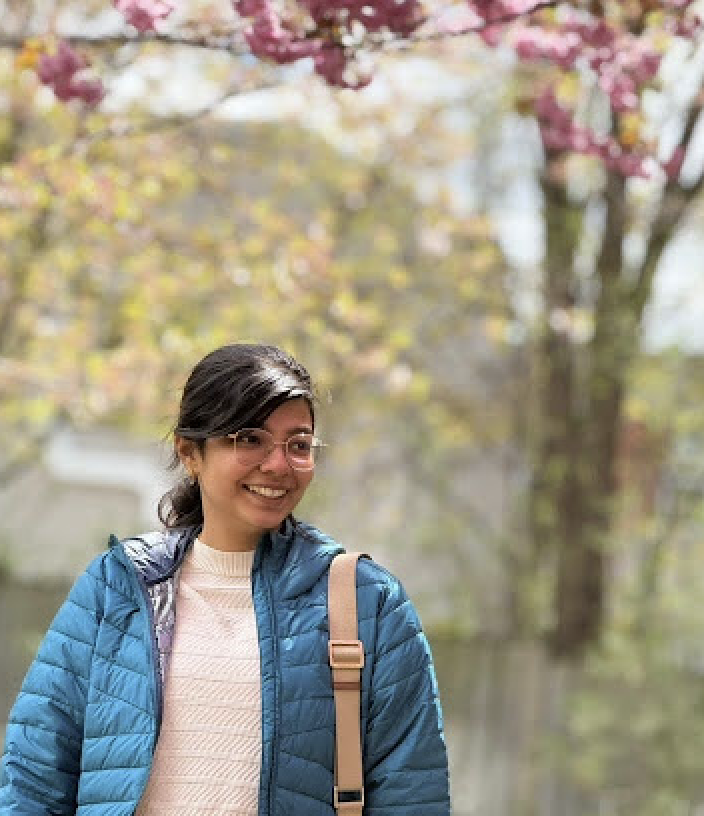
Self-taught artist, designer and illustrator Divya Sanchana Ananth blends curiosity and creativity for a distinct style that feels as quirky as it does relatable. As playful as it is observant, Divya’s ability to weave intriguing visual stories while still maintaining a warm and cutesy vibe makes for a quietly compelling experience that draws our eyes to her work.
With a profoundly reflective approach that transforms and reinterprets history, culture and identity rooted in a comforting yet vibrant infusion of texture and detail, Divya’s work draws from the joy of observing the world around us and interpreting it with our unique perspective.
As May’s Monthly Muse pick, Divya dives into her art journey and style, the inspiration behind series like ‘Windows of Madras’ and ‘Alphabet to Palette’ shared on her Instagram @_divya_draws, how she overcomes creative blocks and more.
Read our Q&A with Divya below!

1. Tell me a bit about your passion for art and the journey so far?
I’ve loved drawing for as long as I can remember. Growing up, I was always sketching little characters, animals, buildings, or random things that caught my attention (it was mostly Pokemon and Winx fanart for a while, we all have phases). Over time, that desire to ‘draw pretty things’ slowly turned into a more intentional creative practice. I studied visual communication design, which helped me think about storytelling and observation in a deeper way, but a lot of my work still comes from the simple joy of noticing things and wanting to document them visually.
2. How would you describe your art style? Is there a signature style that you’ve made distinctly your own?
I think my work sits somewhere between playful-cutesy and observant. Even when I’m drawing something detailed or architectural, I tend to approach it with warmth and personality rather than strict realism. I’m very drawn to texture, colour, light, tiny details, and visual storytelling. A lot of people tell me my work feels comforting and warm, which is honestly one of my favourite compliments.
3. I’d love to know about the ‘Windows of Madras’ series you’re currently sharing on your page. What inspired the idea and what’s been the process of creating it?
The idea came from simply being in Chennai and noticing how beautiful some of the older windows were (especially in the older parts of the city). They weren’t just functional and were full of character. I started photographing windows from historic buildings across the city and eventually turned them into illustrations. The process usually involves researching the building, studying the shapes and details closely, and then reinterpreting them in my own techniques while still retaining their identity and keeping them recognizable.
4. What’s been your favourite part of creating this particular series?
I’ve really enjoyed how this series has made me pay attention to the city differently. Buildings you just used to drive by become potential sources of inspiration. And once you start observing these details, you realise how much personality they carry. I’ve lived in Chennai all my life and only recently moved to a different city. So this project was a way for me to revisit my city and keep the memories alive.
5. You’ve done a lot of other projects like ‘Alphabet to Palette,’ tell me a bit about that?
“Alphabet to Palette” was a project where I explored colour through language, culture, and storytelling. I mapped each letter of the Tamizh alphabet to a specific colour. This meant that every Tamizh letter could have its own unique colour. This started from a random question that popped into my brain ‘Can a word have a colour?’ The question stayed with me, almost compelling me to find a satisfactory answer! And now with the power of AI, every world in the Tamil language can have its own unique colour.
Check it out here : https://alphabet-to-palette.lovable.app (You can now also find out what colour your name is plus it’s a handy way to create random colour palettes)
6. Both these series have a distinct cultural identity, is that something you’re always keen to bring into your work? Are there other heritage/culture centric topics you’d love to try creating something around in the future?
I don’t consciously set out thinking, “I want to make cultural work,” but I naturally end up drawing from things familiar to me; cities, architecture, food, birds, local textures, everyday visual details. I think culture exists in all of those things. I’d definitely love to explore more heritage-related subjects in the future, especially old signage, regional typography (I have a big photo collection of interesting typography), traditional markets, and lesser-known architectural details that people often overlook.
The best thing you can do for your creativity and mental peace is to work through the guilt and accept that periods of rest are not a luxury but a necessity.
7. What sparks your inspiration? And how does an idea develop into a full-fledged art series or project?
Most ideas begin with curiosity. I’ll notice something repeatedly, maybe a pattern, a type of window, a bird, a font, or even a colour, and I’ll keep thinking about it long after I’ve seen it. Usually that’s a sign there’s something worth exploring further. I also have a very visual memory and that helps to conceptualize ideas, oftentimes I begin with nothing but a vision of what I want something to look like. Finding my way there involves collecting references obsessively, sketching loosely, researching a bit, and then slowly building a visual language around the idea until it starts feeling like a cohesive series.
8. Are there any styles you’re particularly interested in experimenting with in the future?
I’d love to experiment more with more narrative-based work, maybe in the form of books, editorial illustrations or longer visual storytelling projects. And of course my style keeps evolving with each project, I’m constantly learning new techniques and formats.
9. Do you struggle with creative blocks and how do you personally overcome that?
Definitely. I think every artist does at some point. Usually when I hit a creative block, it’s because I’m putting too much pressure on making something “good.” What helps me most is stepping away from the idea of productivity and just observing things again. I go periods without creating anything, but instead of giving myself grief over it, I just see these as R&R – I usually come back stronger. It’s easier said than done though. Creatives today tend to feel very guilty when they are not able to produce work consistently – especially with the demands of social media – but the best thing you can do for your creativity and mental peace is to work through the guilt and accept that periods of rest are not a luxury but a necessity.
10. For someone who wants to start their art journey, but aren’t sure where to start, what would you suggest as practical steps to get started?
Put pencil to paper! You don’t need the perfect style, tools, or a huge audience to begin. Pick subjects you genuinely enjoy drawing and allow yourself to make imperfect work. Sharing your work regularly also helps a lot, even when it feels super scary at first. Most artists improve by making many things, not by waiting until they feel ready. Honestly, half the journey is just showing up before you feel ready and embracing imperfections.
Visit Lyrical Muse to check out more Monthly Muse features.


Leave a Reply