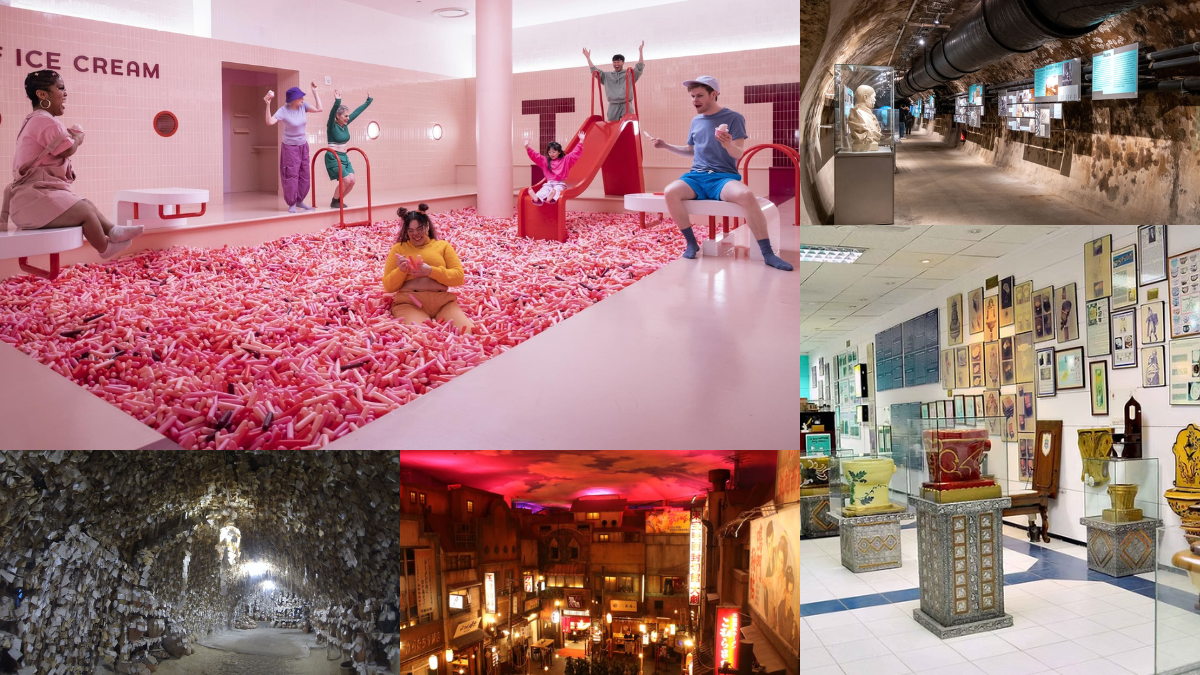
Museums are often imagined as repositories of fine art, archaeology and historical artefacts. Yet some of the world’s most fascinating institutions are devoted to subjects far outside the traditional canon, from heartbreak and instant noodles to black magic, sanitation and underwater sculpture.
As International Museum Day 2026 marks the theme “Museums Uniting a Divided World,” these unconventional spaces reflect the expanding role of museums as places that preserve not only history, but memory, identity, popular culture and everyday human experience.
Museum of Ice Cream (USA)
The Museum of Ice Cream belongs to a newer generation of immersive museums built around participation as much as display. Combining pastel-toned installations, confectionery tastings and theatrical set design, it explores nostalgia, childhood memory and sensory experience through interactive spaces. The concept has since expanded with permanent locations in New York, Singapore, Austin, Chicago and Las Vegas.
Museum of Broken Relationships (Croatia)
Founded by Croatian artists and former partners Olinka Vištica and Dražen Grubišić after their breakup, the museum has evolved into a poignant archive of love and loss. Its exhibits consist of personal objects donated from around the world, each paired with an anonymous testimony that transforms ordinary belongings into records of intimacy, separation and memory.
Sulabh International Museum of Toilets (New Delhi)
Among India’s most unusual cultural institutions, the Sulabh International Museum of Toilets traces the evolution of sanitation across centuries and civilisations. Its collection ranges from ornate European chamber pots to historical lavatory systems from ancient societies. Beyond curiosity value, the museum also examines sanitation as a marker of social reform, public health and urban development.
Jin Min Cat Museum (Mysuru)
India’s first museum dedicated exclusively to cats approaches feline culture through education, art and responsible pet care. Alongside memorabilia and breed information, the space also functions as an awareness initiative intended to challenge misconceptions surrounding cats in Indian households.
Icelandic Phallological Museum (Reykjavík)
Perhaps one of the most widely discussed niche museums in the world, the Icelandic Phallological Museum (often called a penis museum) houses an extensive scientific collection of phallic specimens from numerous mammalian species found in Iceland. Despite its reputation for shock value, the museum aims to approach the topic as a serous study of zoology, comparative anatomy, and cultural history.
Museum of Bad Art (Massachusetts)
The Museum of Bad Art was established with a deliberately unconventional mission: preserving works considered too flawed, awkward or technically unsuccessful for traditional galleries. Its collection challenges conventional ideas of artistic merit while simultaneously celebrating sincerity, ambition and creative failure.
Avanos Hair Museum (Türkiye)
Located beneath a ceramics workshop, this unusual museum contains thousands of locks of hair donated by women visitors over several decades. Names and handwritten notes accompany many of the samples, giving the collection the atmosphere of an evolving social archive.
Museum of Death (New Orleans)
This museum examines cultural attitudes toward death through crime scene photography, mortuary artifacts, forensic investigation, serial killer correspondence and historical funeral objects. Disturbing in parts, the collection reflects society’s fascination with mortality and the rituals surrounding it.
Torture Museum (Amsterdam)
Set within a series of darkened chambers, Amsterdam’s Torture Museum presents replicas and historical accounts of punishment devices used across Europe during different eras. The museum is less sensational than its title suggests, focusing instead on how fear and public spectacle shaped judicial systems in earlier centuries.
Ramen Museum (Yokohama)
The Shin-Yokohama Ramen Museum recreates the atmosphere of postwar Japan through an indoor streetscape inspired by the late 1950s. Visitors move through regional ramen counters while tracing the evolution of one of Japan’s most globally recognised dishes.
Cup Noodles Museum (Yokohama)
Dedicated to the invention of instant noodles by Momofuku Ando, this museum explores how a simple convenience food reshaped global eating habits. Interactive exhibits allow visitors to customise their own cup noodles while documenting the industrial and cultural rise of the product.
Ben & Jerry’s Flavor Graveyard (Vermont)
Situated beside the company’s factory in Vermont, this outdoor installation commemorates discontinued ice cream flavours through mock gravestones engraved with epitaphs. The project blends corporate storytelling with humour, turning product nostalgia into a visitor attraction.
International Spy Museum (Washington D.C.)
The International Spy Museum examines the history of espionage through surveillance equipment, coded communications and accounts of intelligence operations across different countries and conflicts. Interactive exhibits place visitors within simulated undercover scenarios while documenting the political realities of intelligence work.
Cancun Underwater Museum of Art (Mexico)
Founded by artist and inventor K. Sudhakar, this museum displays functioning vehicles shaped like everyday objects, including cameras, shoes, handbags and musical instruments. The collection reflects an unusual blend of engineering experimentation and pop visual culture.
Mayong Central Museum & Emporium (Assam)
Located in a village historically associated with folklore surrounding sorcery and mysticism, this museum preserves manuscripts, ritual objects and oral histories linked to regional traditions of black magic and healing practices.
Paris Sewer Museum (Paris)
Beneath the boulevards of Paris lies a museum dedicated to the city’s vast sewer system, an engineering network long referenced in French literature and urban history. The museum offers insight into how sanitation infrastructure transformed modern cities.
Mütter Museum (Philadelphia)
Operated by the College of Physicians of Philadelphia, the Mütter Museum contains preserved anatomical specimens, medical instruments and pathological collections dating back centuries. Its exhibits examine the history of medicine while documenting the complexities and fragility of the human body.
International Cryptozoology Museum (Maine)
Dedicated to the study of legendary creatures such as Bigfoot and the Loch Ness Monster, this museum explores the intersection of folklore, pseudoscience and popular imagination. Its displays include field research materials, models and alleged cryptid evidence collected over decades.
Batcat Museum (Bangkok)
Housing tens of thousands of toys and collectibles, the Batcat Museum charts the global influence of comic books, superheroes and animated franchises. The collection spans generations of pop culture memorabilia, from vintage figures to contemporary cinematic merchandise.
Share your thoughts with us on X and Instagram, and visit Lyrical Muse for more such coverage!


Leave a Reply