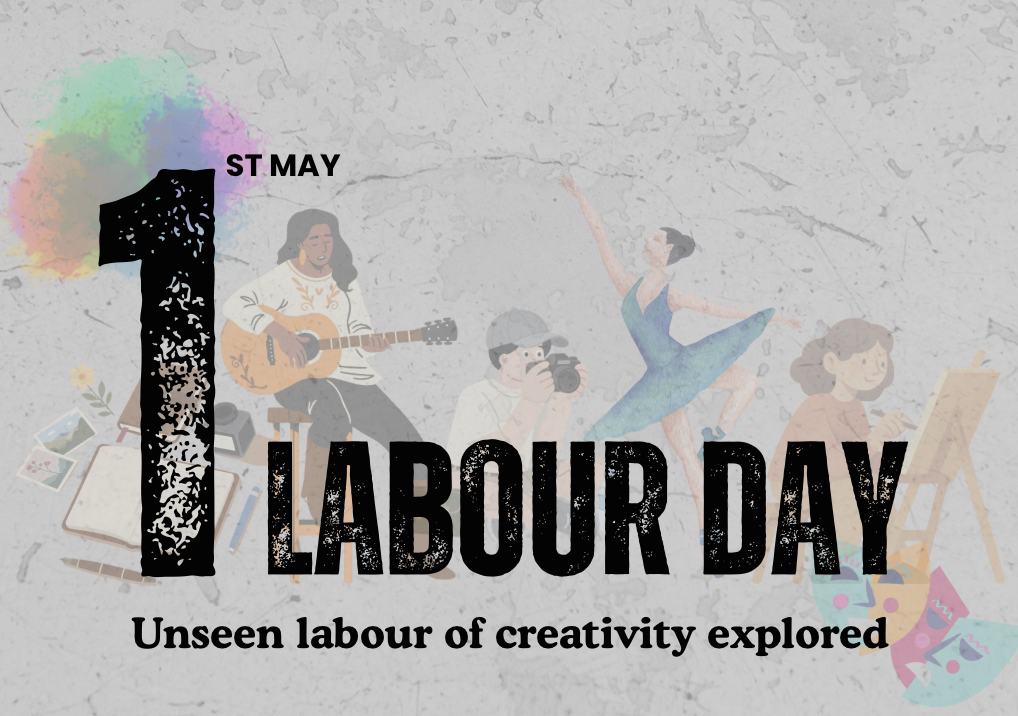
May 1 is International Labour Day and to mark it we explore the unseen, under appreciated and undervalued aspects of a creative profession. Dive into what artists, photographers, dancers, musicians from around the world have to say.
“A lot of the real work happens in isolation and doesn’t get seen at all,” says musical artist BLVCKHNDZ, speaking of his songs and music videos that audiences consume.
And this is the truth of creativity regardless of medium. Whether you’re listening to music, taking in art and photography or watching a performance, quite often our reactions or thoughts as consumers of regarding any creative work is constrained by passing compliments and praise.
As an outsider looking in, it can be difficult to understand the effort that goes into shaping your craft. Hours of ideation, consistent work and the deeply felt emotions, they are extremely personal yet somehow every creative person knows they leave a bit of their heart and soul with each work they put out into the world.
“Across any creative work, whether it’s a campaign, a film or a brand, the invisible effort lies in the constant balancing act between instinct and intention.” – Mounish, Photographer
As artist Visalachi alias Jeya says, ” Many people are doing great work, but only a few get noticed. Even those who aren’t recognised also spend a lot of time and emotions on their work. But very often, people don’t even stop to look at the work, and that can feel a little hurtful.”
Emotions are at the core of creativity, whether that’s vibrant canvas or performance arts like dance and theatre. Kathak dancer Rakshita Jain says, “As a dancer, working through physical fatigue, self-doubt, and creative blocks, processing personal emotions, observing life deeply, and translating those experiences into movement are all challenging.
“I feel what often goes unseen is the emotional and mental labour behind the performance. People usually witness the final, polished piece- the grace, the expressions, the storytelling, the concept, but not the constant inner work it takes to arrive there.”
“Clean polished, effortless,” are also the words used by photographer Mounish in speaking about the intricacies behind his work. He says, “Most people only see what creative work looks like when it’s finished. What they don’t see is how much uncertainty sits behind that outcome. A large part of the process is figuring things out when there isn’t a clear answer. Shaping half-formed ideas, aligning different perspectives and making decisions that will either make or break the final output.”
“You have to create your own traction and create your own audience.” – Amber Ais, Musician
He adds, ” Across any creative work, whether it’s a campaign, a film or a brand, the invisible effort lies in the constant balancing act between instinct and intention. You’re not just creating; you’re translating ideas into something that works in the real world, within timelines, budgets and expectations. That comes with a kind of pressure that isn’t always visible. The responsibility to get it right, even when the path isn’t fully defined.”
Pressure can also become internal as BLVCKHNDZ explains, “There’s also this constant tension between making something that feels true to you and the pressure to make something that performs well. I’ve had moments where numbers made me question everything, even when I knew the work was solid. I think what outsiders don’t always see is how much belief it takes to keep going when the response doesn’t match the effort.”
“Even if many don’t support us, just one person’s encouragement can boost our energy and confidence.” – Visalachi a.k.a Jeya, Artist
Musician Amber Ais also highlights the effort it takes to get people to take note and care about your craft as an indie artist. She says, “You don’t have a built in fan base that label kind of seeks out and does the work to find. You have to create your own traction and create your own audience. I think especially with the TikTok age and short form content I think that people don’t want to stick around for the journey they just want to be told something is worth investing in. It’s hard to fight through the noise and get people to really listen and care.”
Building your reality around your art and trusting that right people will eventually find it is all we can do as BLVCKHNDZ says. But finding those people – no matter how long it takes or how fleeting it might be – is a moment that most creatives hold close to their hearts.
“Even if many don’t support us, just one person’s encouragement can boost our energy and confidence, ” says Visalachi, with Amber adding, “When people show up that’s where it really matters.Showing up can be a coming to a show, buying merch, leaving a comment on content.”
“I feel it requires you to constantly create opportunities for yourself, stay relevant, and keep showing up even when there’s so much uncertainty.” – Rakshita Jain, Dancer
As important as the emotional aspect and the high of validation is, creativity is not without a myriad of technical elements to consider. For instance, Devika Das, theatre artiste at Nishumbita School of Drama notes, ” A successful theatre performance is a combination of backstage, music, set designing, props, and production work in addition to the perseverance required to bring a character to life on stage.”
Indie music duo Remote also highlight the amount of self-promotion involved in trying to get yourself more opportunities, saying, “We have spent hundreds of hours reaching out to playlists, press, promoters for gigs, other artists for support opportunities and sometimes we don’t even get a response back. This process is so time consuming but it’s the price you pay when you have to be your own press officer and not fork out £1000’s of pounds on a PR package.”
Screenwriter Vatsala S also makes an interesting point on how audiences view creatives as having more power to influence than they actually do. She says, “I feel like people vastly overestimate the creative involvement and decisional authority of a screenwriter while undermining their contributions at the same time.”
“Some social media posts seem random and fleeting, but there is a lot of conscious time and effort that goes into it” – Remote, Music Duo
” Exposure doesn’t pay the bills,” she adds, and that is yet another aspect that people don’t often consider when they appreciate creativity and move on the next thing that catches their attention.
Rakshita highlights, “Another very important aspect that’s often under appreciated is the instability that comes with choosing dance as a career. I feel it requires you to constantly create opportunities for yourself, stay relevant, and keep showing up even when there’s so much uncertainty.”
If dance has you leaning on self-belief and courage to advocate for yourself and your talents, music is no different, as Remote reveals, ” The process of creating a brand for yourself and establishing your own identity in a completely oversaturated market is a challenge. It’s so difficult to be seen in this environment and even though some social media posts seem random and fleeting, there is a lot of conscious time and effort that goes into creating a vision for a single or an EP or overall. This includes everything that we put out into the world, we need to make sure we are building the world we want for ourselves.”
“I think the biggest form of support though is belief, when people recognize the vision early and treat it like it matters.” – BLVCKHND, Musician
This struggle to establish yourselves and get noticed is rooted in the “romanticized idea of a suffering artist” as Vatsala reflects, “Society and popular culture, media has perpetuated how passion and stability are two things which don’t go hand-in-hand. So, you’ll have people offering to pay you in exposure when it costs real, hard money to turn on the lights and put food on the table.”
Support doesn’t always have to be financial, even if that’s preferred and most helpful. BLVCKHND says, “Even something as simple as sharing the work in a thoughtful way or putting someone else onto it goes a long way. It tells me the art actually connected, not just passed by. I think the biggest form of support though is belief, when people recognize the vision early and treat it like it matters before it’s validated by numbers or mainstream attention. That kind of support is what helps artists keep building.”
Support whether that’s streaming your favourite musician’s album, catching a dancer’s performance live or sharing the work of artists and photographers makes a world of difference to them ; infusing joy into the entangled layers of introspection, observation and refinement into their complex process.
An outsider, detached from the weight,woes and wonders of the creative world may never quite be able to understand the unseen labour and love that goes into a craft because as Mounish says, “In the end, what people engage with is just the surface.”
But maybe letting these quiet yet imaginative thinkers know that the work they put in has been seen is more than enough as a first – and small – step in valuing and celebrating creativity the way it deserves to be.
Visit Lyrical Muse for more inspiring, original features highlight creative talent and more.


Leave a Reply