Every year on 17 March, millions across the globe mark St Patrick’s Day—a celebration that has travelled far beyond Ireland’s shores to become one of the most recognisable cultural festivals in the world.
What began as a religious feast day now blends history, heritage and high-spirited festivity, uniting communities from Dublin to London to Chicago in a sea of green.
Who was St Patrick?
St Patrick, the patron saint of Ireland, is credited with bringing Christianity to the island in the fifth century. Born in Roman Britain, he was kidnapped as a teenager and taken to Ireland as a slave. After escaping, he later returned as a missionary, converting thousands and establishing religious foundations – most notably in Armagh.
Though the exact dates of his life remain uncertain, 17 March is widely observed as the day of his death, giving rise to the annual commemoration.


Why is the shamrock so important?
The shamrock – a small three-leaf clover – is closely associated with St Patrick. According to tradition, he used it to explain the Christian concept of the Holy Trinity: the Father, Son and Holy Spirit.
Over time, the plant also came to symbolise faith, hope and love. While four-leaf clovers are often linked with luck, it is the three-leaf shamrock that holds cultural and historical significance in Ireland.
Did St Patrick really banish snakes?
One of the most enduring legends claims that St Patrick drove snakes out of Ireland. In reality, there is no evidence snakes ever inhabited the island. Historians suggest the story is symbolic—representing the saint’s efforts to eliminate pagan beliefs.
How is St Patrick’s Day celebrated today?
Originally a solemn religious observance, St Patrick’s Day has evolved into a global festival celebrating Irish culture. Parades, music, dancing and communal gatherings define the day, alongside traditions like wearing green and displaying shamrocks.
In Ireland, the celebration remains deeply rooted in both faith and festivity. Emma, hailing from Ireland, explains how the day still brings people together:
“St Patrick’s Day weekend is a great weekend for us as it’s a bank holiday… it’s a really good day to come together and celebrate being Irish. The atmosphere in your town is electric all day, with Irish music on every street corner… everyone wears green, and it’s very festive.”
She also notes the holiday’s religious origins are not entirely forgotten: “It is a tradition for lots of families to go to mass before attending parades… the day is first and foremost a holy day.”


Why does everything turn green?
Green has become the defining colour of St Patrick’s Day, though it was not always so. Blue was historically linked to Ireland, but green took over in the 18th century due to the prominence of the shamrock and Ireland’s lush landscape—often called the “Emerald Isle”.
Today, landmarks around the world join in. The London Eye glows green over the Thames, New York’s Empire State Building is illuminated in emerald hues, and Chicago famously dyes its river green.
What role do parades play?
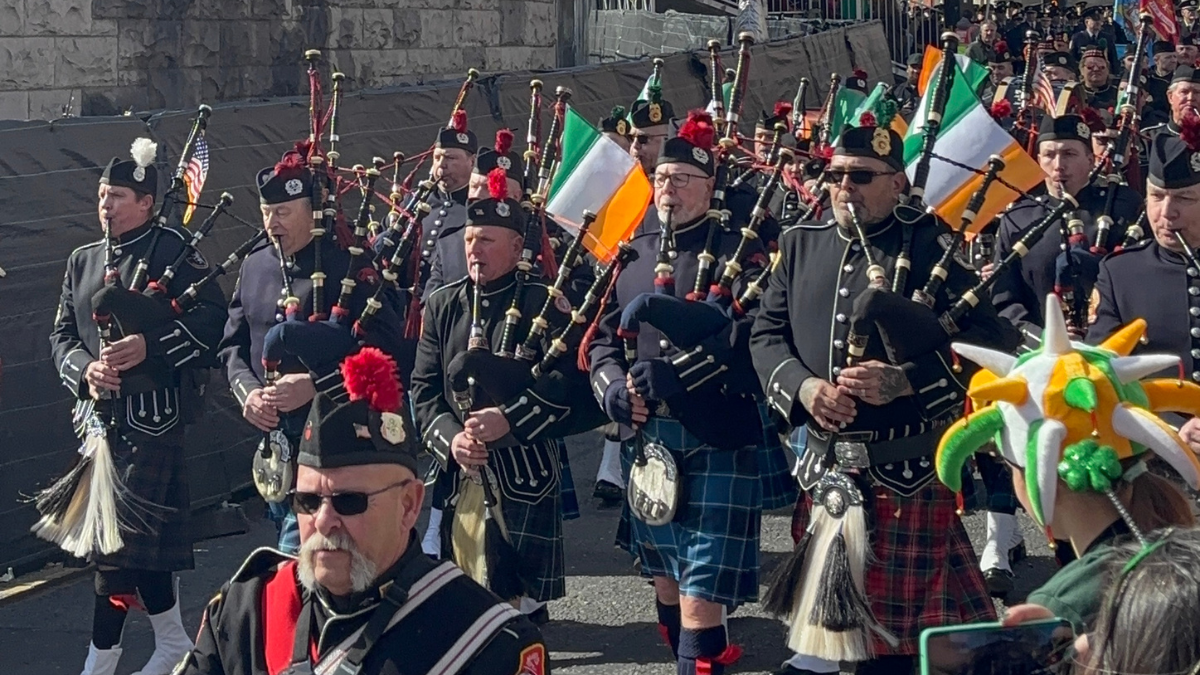
Parades are central to modern celebrations, drawing vast crowds in cities like Dublin, London and New York. These events showcase Irish music, dance and cultural pride.
Yuva, who has attended such parades, describes their impact: “From my experience, the parade had such a lively and welcoming atmosphere… it was really nice to see people celebrating Irish culture together and feeling part of the community. The atmosphere was really fun and vibrant with people cheering and enjoying the performances.”


Beyond myths and stereotypes
While leprechauns, green costumes and phrases like “kiss me, I’m Irish” dominate popular imagery, not all traditions reflect authentic Irish heritage. As Emma points out, “We don’t celebrate leprechauns… it’s more part of the satirical and commercial side to the event.”
Similarly, while the day is often associated with drinking culture, it is not its defining feature. For many, it remains a moment of cultural pride, connection and reflection.
From its sacred beginnings to its global spectacle, St Patrick’s Day continues to evolve — yet at its heart lies a simple idea: a celebration of identity, history and belonging, shared across borders on one unmistakably green day.
(Image Credits: Yuva Bala)
Got your own St Patrick’s Day traditions or memories? Share your thoughts with us on X, and explore more culture-led stories on Lyrical Muse.


Leave a Reply