The 2026 BAFTA Film Awards nominations, announced yesterday, did not blow up the awards race so much as subtly bend it. At a moment when Oscar momentum often feels decisive, the British Academy once again reminded the industry that its tastes remain adjacent, not identical, to Hollywood’s.
The result is a nominations slate that largely mirrors the season’s expected heavyweights, yet makes space for regional performances, films and British-led projects that complicate the narrative just enough to keep the conversation alive.
At the top end, there were no shocks in the films that dominated overall. One Battle After Another, Sinners, Hamnet, and Marty Supreme all landed where awards watchers anticipated. But BAFTA’s structural differences, especially six acting slots rather than five, opened the door for names and performances that had narrowly missed out elsewhere. Those inclusions, rather than outright absences, are what defined this year’s sense of surprise.
Below are the choices that caught attention online, and gave this year’s BAFTA lineup its distinctive character.
‘Wicked: For Good’
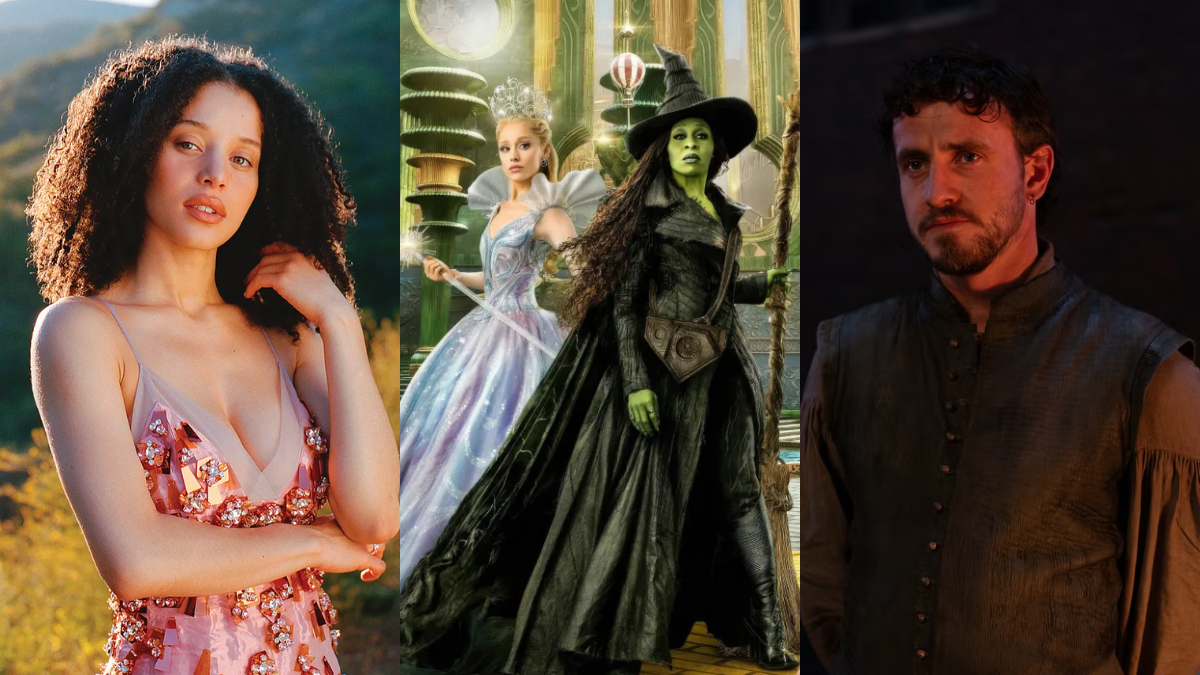
One of the most closely watched outcomes concerned Wicked: For Good. After a difficult Oscar morning last week, the sequel arrived at BAFTA with a quieter presence than many had expected. Its recognition was confined to craft categories, including costume design and hair and make-up, while the film itself did not feature in the major above-the-line races. The result reflected how concentrated the race has become at this stage of the season, regardless of a film’s cultural footprint.
Paul Mescal
If Wicked’s outcome confirmed a trend, Paul Mescal’s supporting actor nomination for Hamnet disrupted one. Mescal missed out on an Oscar nod for his turn as William Shakespeare, yet BAFTA placed him firmly back in contention. It marks his third BAFTA Film Awards nomination in four years, and underscores the Academy’s consistent attentiveness to his work. With Mescal currently stepping away from awards campaigning to film the Beatles biopics, the nomination still strengthens his long-term positioning as one of the most respected actors of his generation.
‘Frankenstein’
Guillermo del Toro’s Frankenstein landed in a more complicated space. The film performed strongly across craft categories and earned a supporting actor nomination for Jacob Elordi. Del Toro himself, however, did not appear in the directing lineup, and the film was absent from Best Film and Adapted Screenplay at BAFTA despite appearing in those Oscar categories. It left Frankenstein positioned as a craft-forward contender rather than a top-tier awards player.
Chase Infiniti and Odessa A’zion
Among the most energizing developments was the emergence of Chase Infiniti as a leading actress nominee for One Battle After Another, alongside a Rising Star citation. After missing out at the 2026 Oscars, her BAFTA recognition feels like a timely course correction, spotlighting one of the year’s most talked-about breakthroughs.
A similar boost arrived for Odessa A’zion, who enters the supporting actress race for Marty Supreme after being overlooked by the Academy. For A’zion, it marks her first BAFTA nomination, a significant moment in a film that continues to perform strongly across the board.
‘I Swear’
British independent cinema also benefited from BAFTA’s instincts. I Swear, one of the year’s most successful UK indies, translated its domestic impact into five nominations, including leading actor for Robert Aramayo and supporting actor for Peter Mullan. In a crowded awards season, that level of recognition brings renewed attention to a film that might otherwise struggle for visibility outside the UK, reinforcing BAFTA’s role as a platform for smaller national stories.
Foreign Films
BAFTA has earned a reputation in recent years for being more receptive to non-English-language cinema than many of its peers, which made this year’s lineup particularly telling. Outside of Sentimental Value, international titles found their recognition largely contained within the “Film Not in the English Language” category.
Palme d’Or winners It Was Just an Accident and Sirat both landed there but struggled to break through elsewhere, despite strong critical backing. The pattern suggests a narrowing of space rather than a lack of appreciation, with BAFTA voters appearing more selective than expansive when it came to translating international acclaim into broader category support.
Wagner Moura
One of the more quietly startling developments was the absence of Wagner Moura from BAFTA’s acting lineup for The Secret Agent. The film itself was clearly on voters’ radar, earning nominations in other categories, which only made Moura’s omission more striking. It marked one of the clearer points where BAFTA’s acting lineup diverged from the wider awards consensus.
Emily Watson
Emily Watson’s supporting actress nomination for Hamnet arrived with little pre-awards chatter, making it one of the most genuinely unexpected inclusions. It also marked her first BAFTA film nomination in 25 years, a quietly significant moment for an actor whose career spans prestige cinema and television alike.
Carey Mulligan
Carey Mulligan’s supporting actress nomination for The Ballad of Wallis Island felt quintessentially BAFTA. The understated British comedy was never positioned as a major awards contender, yet Mulligan’s inclusion signaled the Academy’s comfort in championing smaller, character-driven performances alongside more obvious season favorites. For a former BAFTA winner and five-time nominee, the nod reads less as a comeback and more as a reminder of how closely the institution still tracks its own.
Harris Dickinson’s ‘Urchin’
Harris Dickinson’s directorial debut, which earned strong festival attention and critical appreciation, did not translate into nominations at this stage of the BAFTA race. Despite appearing on earlier longlists, the film ultimately did not feature in the final lineup, and its absence on nominations morning stood out as one of the quieter surprises.
As the season continues, the nominations reinforce familiar frontrunners while subtly widening the conversation, proving that BAFTA Awards remains its own barometer in an awards season that is far from settled.
What surprised (or shocked) you most in the 2026 BAFTA lineup? Share your thoughts with us on X and Instagram. Visit Lyrical Muse for more film and entertainment stories shaping the season.


Leave a Reply