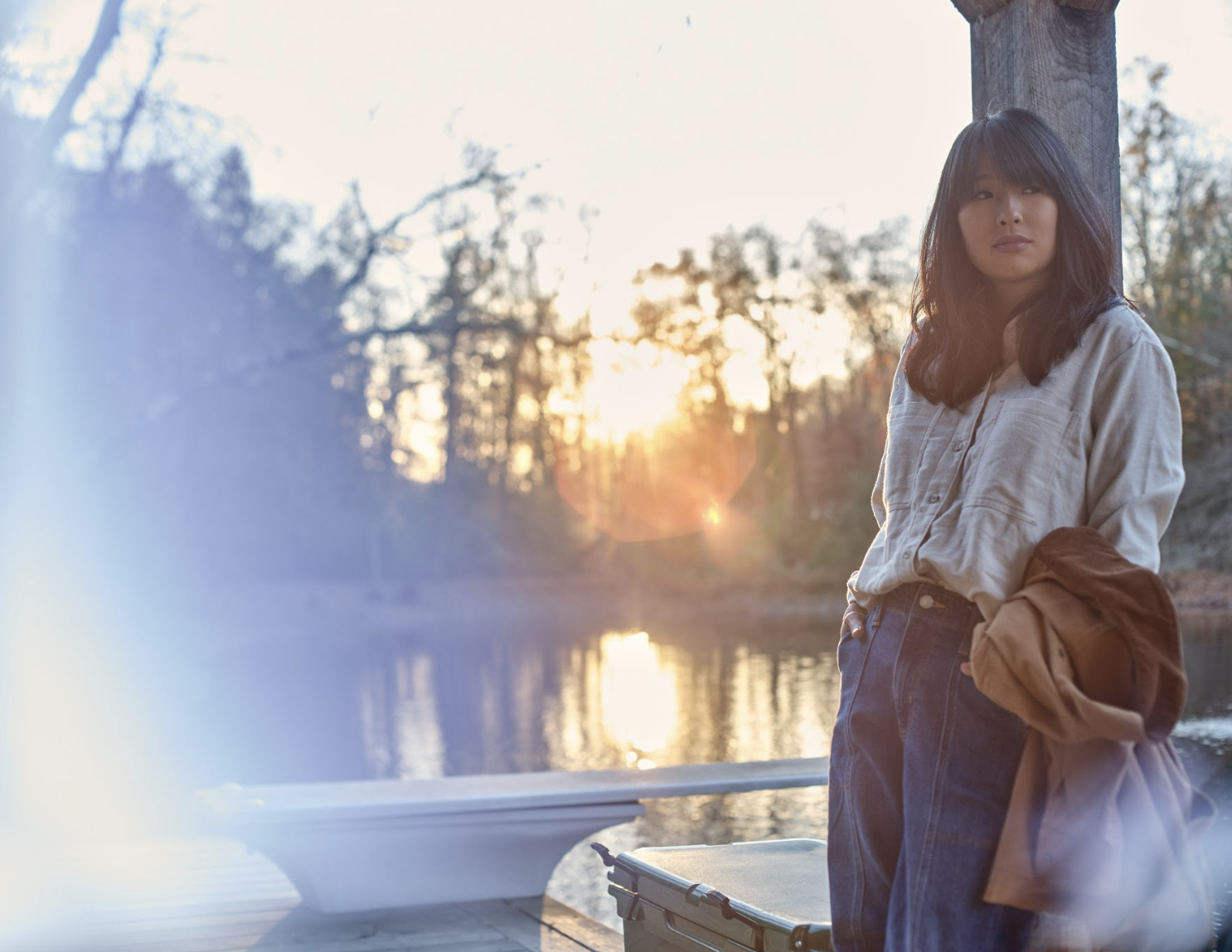
Singer-songwriter Kim Edwards stitches a decade of stories together on latest folk-pop album Vignettes.
Spanning tales from books, podcasts, and the lives of friends and strangers, each track on the collection brims with empathy and poignance taking us on a journey laden with equal parts heartbreak and hope.
Built on layers of strings, horns, and lush piano, the album hones in on Kim’s classical piano background that crackles with fragility yet swells with orchestral expansiveness.
With a delicate soundscape, sweeping textures and poetic lyrics blending together, the album is one that feels stunningly intimate yet resonant from beginning to end.
Kim chats with Lyrical Muse about Vignettes,taking us through her sonic evolution, personal favourite tracks and more.
What is the inspiration/message behind ‘Vignettes’?
“Vignettes” is a collection of 10 songs, each with its own story to tell. I wrote these songs over the span of a decade; they were the oddballs, the ones that weren’t quite a fit for other projects, but they were far too special to me to ever forget. Some songs were born out of songwriting assignments, some songs came out of late-night conversations with friends, and other songs were the result of processing stories (fictional and non-fictional). Even though I didn’t write them with the intent of creating a cohesive concept album, they eventually (and naturally) fell into place that way.
“Vignettes” is an album of stories and sketches of life, and my hope is that some of these songs can help give words to some of the emotional nuances we experience.
Kim Edwards
How would you say your sound has evolved over time? Where do you see it going from here?
I think my sound has evolved over years, but the path has felt non-linear at times. My first album, “Wanderlust,” explored multiple genres, with everything from singer/songwriter to surf to pop rock thrown in; I think it worked because of the travelogue concept of the album. My next EP, “Lovers and Loners,” was more focused on the singer/songwriter sound. I’ve released a few singles in between, with “Far” being an 80s-synth-pop track and “When We Were Young” leaning more into a cinematic modern pop sound.
All that to say: I’ve really enjoyed the freedom of being able to explore whatever sound I want. When I was first writing songs, the dream was to get signed to some kind of label. But as I’ve grown, I’ve realized I just want to create music that I’m proud of and that I truly love, without feeling beholden to anyone else.
“Vignettes” is very special to me because it really does capture the sound that I’ve envisioned for these songs for so long. My producer, Jared Salte, is a master in his ability to translate my demos and notes into the production that I’ve always dreamed of.
I don’t know exactly where it will go from here, though I will say that this “Vignettes” sound feels especially like “me.” At my core, I’ve always loved piano-and-strings vibes from artists like Regina Spektor, Ingrid Michaelson, and Sleeping At Last. So I think there will probably be an element of that moving forward. But I also think I will likely continue to explore different genres – because why not? We’ll see where inspiration takes me!
The theme of empathy spans the album, what sparked the exploration of this particular theme?
Many of the stories have a melancholy about them, but I like to think of the common theme less as sadness and more as empathy. “Vignettes” is an album of stories and sketches of life, and my hope is that some of these songs can help give words to some of the emotional nuances we experience.
What’s your creative process? Is your music inspired by personal stories, things around you or a mix of both?
The creative process for this record was very different from previous ones in that a good chunk of the songs were results of songwriting exercises. In the past, I was concerned that songs born out of assignments were perhaps less genuine because they didn’t come from a place of inspired spontaneity. But now I view these exercises as a catalyst for drawing out the songs and ideas that were already rumbling around inside. Early in my songwriting, I was much more apt to feel a sudden, deep impulse to write, but nowadays I don’t often “feel it”, and that’s where the discipline and practice of songwriting (and songwriting exercises) comes in.
With that being said, my music is inspired by a mix of both personal stories and things around me. I tend to absorb and internalize a lot, and songwriting can be a way to process it.
Is there anything – an idea, emotion or genre – that you haven’t tried so far that you’d love to experiment with in the future?
It’s totally out of my wheelhouse, but I’d love to experiment with alternative/indie music…maybe something like Vampire Weekend or Fountains of Wayne.
I’m really stoked for “Vignettes” to finally be released into the world. It’s been a long-time coming. I’m very proud of this album and all the work that went into it, and I’m excited to be able to share it with others.
Kim Edwards
To you, what’s the most rewarding part of making music? And what’s the most challenging part?
For me, the most rewarding part of making music is when I’m able to fully realize my vision for a song; there is a certain kind of joy and satisfaction that takes place that almost feels divine. (Shoutout to Jared Salte, my producer, who was an essential part of this.)
The most challenging part of making music is in the early stages of pushing through all the terrible writing to get to the better writing. For every song I write that I like enough to share, there are 15 other terrible songs I’ve written. If I’m not careful, it’s easy for me to spiral and think I’ll never write another worthwhile song again. But the discipline of songwriting has taught me that you have to dig through some dirt to get to gold.
Personally, what’s your favourite track off the album and why?
I love them all, but “The Seafarer’s Song” has a special place in my heart, partly because it’s the one that I’ve been carrying around the longest (I wrote it back in 2012). It’s also one of the more abstract tracks on the album, with intentionally vague, visceral lyrics that differ from the tone of the rest of the record. While I do have my own personal meaning layered into the lyrics, I love that they also leave a lot of room for interpretation. I don’t always write that way, but, generally speaking, those kinds of open-ended songs tend to end up being among my favorites.
This track also contains some of my favorite production on the album, too. My producer, Jared Salte, gave me a beautiful arrangement with what he called “Icelandic brass” mixed with strings and a touch of harp. I don’t think I would have ever thought to use those instruments, but when I heard it, it felt like a puzzle piece clicking into place. The second verse also features one of my favorite vocal moments on the album: high, ethereal harmonies that come forward in the mix to act as a subtle underline of the lyrics.
In your journey so far, what’s been the most surreal moment?
When I was a little girl, The Beach Boys were my first musical loves thanks to my parents and many Full House re-runs. Through a crazy chain of events, I met them in 2013 and became friends with the band and crew. As if that wasn’t surreal enough, in 2018, they asked me to open for them at a local show. It’s a full-circle moment that I honestly still have difficulty fathoming. They are an incredibly gracious, kind, and generous group of people, and I am so thankful to them for the gift and honor of opening for them.
What’s next for you? Any upcoming creative plans you’d like to share?
I’m really stoked for “Vignettes” to finally be released into the world. It’s been a long-time coming. I’m very proud of this album and all the work that went into it, and I’m excited to be able to share it with others. I’ve been working on a special limited-edition vinyl pressing for “Vignettes” (including a booklet with stories behind the songs) which has been a fun, creative side project in its own right.
Finally, what’s one question no one has asked you in an interview so far that you wish you were asked?
Ooh, interesting! Surprisingly, outside of “Steinbeck,” no one has asked me about the specific literary inspirations behind some of the songs. “Steinbeck” was very loosely inspired by John Steinbeck’s novel, “The Grapes of Wrath.” The chorus of “The Seafarer’s Song” has an allusion to Herman Melville’s “Moby Dick.” “Tamed” was inspired by a chapter in Antoine Saint-Exupery’s classic novella, “The Little Prince.” “Please Let Me Go” opens with a famous quote from Shakespeare’s “Romeo and Juliet.” Honestly, I didn’t have a literary theme in mind when writing all those songs, but it feels natural now, and it makes the album name “Vignettes” all the more fitting.
Connect with Kim Edwards : Instagram


Leave a Reply