Taylor Swift has officially regained ownership of her entire music catalogue, marking the end of a years-long, highly publicized dispute over the control of her early work. After reclaiming the master recordings of her first six studio albums, originally sold without her consent, Swift’s victory signals a seismic shift in how musicians can challenge traditional industry power structures.
Taylor Swift acquired the rights from Shamrock Capital, the private equity firm that had purchased the catalogue from Scooter Braun’s Ithaca Holdings in 2020. While financial terms remain undisclosed, sources estimate the deal aligns closely with Shamrock’s original $300-$360 million investment—significantly less than some earlier inflated rumors. With this acquisition, Swift now holds full ownership of her early work, including master recordings, music videos, concert films, album art, photography, and unreleased materials.
This moment marks the triumphant conclusion to one of the most contentious artist-label disputes in modern music history. Let’s take a look at her journey!
The Backstory: Braun, Big Machine & Betrayal
The conflict began in 2019 when Scooter Braun acquired Big Machine Label Group, Swift’s former label, and with it, the masters to her first six albums: Taylor Swift, Fearless, Speak Now, Red, 1989, and Reputation. Swift publicly expressed her dismay over the acquisition, stating she was never given the opportunity to purchase her masters and describing Braun’s involvement as her “worst-case scenario,” citing years of personal and professional conflict.
Initially, Swift was cautiously optimistic about Shamrock Capital’s involvement, hopeful about a potential partnership, until she discovered Braun would continue to profit from the deal. “He would never even quote my team a price,” she wrote in a letter on her website. “These master recordings were not for sale to me.”
The sale triggered an outpouring of support from fans and peers, igniting a wider conversation about contractual transparency and artist autonomy. When Swift declined to partner with Shamrock due to Braun’s continued financial interest, it set the stage for what would become one of the boldest artist-led campaigns in recent memory.
The Response: Taylor’s Version
Instead of backing down, Taylor Swift devised a groundbreaking solution of re-recording her early albums on her own terms. These re-recorded albums, labeled “Taylor’s Version”, include Fearless (Taylor’s Version), Red (Taylor’s Version), Speak Now (Taylor’s Version), and 1989 (Taylor’s Version). Each release featured previously unreleased “vault tracks” and thoughtful production, offering fans a fresh connection to her legacy
These re-recordings were met with both critical acclaim and commercial success, effectively shifting fan loyalty and devaluing the the original versions. For many, it wasn’t just a smart business move—it was a cultural reclamation. Taylor Swift proved that ownership can be reclaimed retroactively, not just negotiated from the start. Her efforts reignited a broader industry conversation around artist rights, creative control and ownership within the music industry.
The Acquisition: A New Chapter
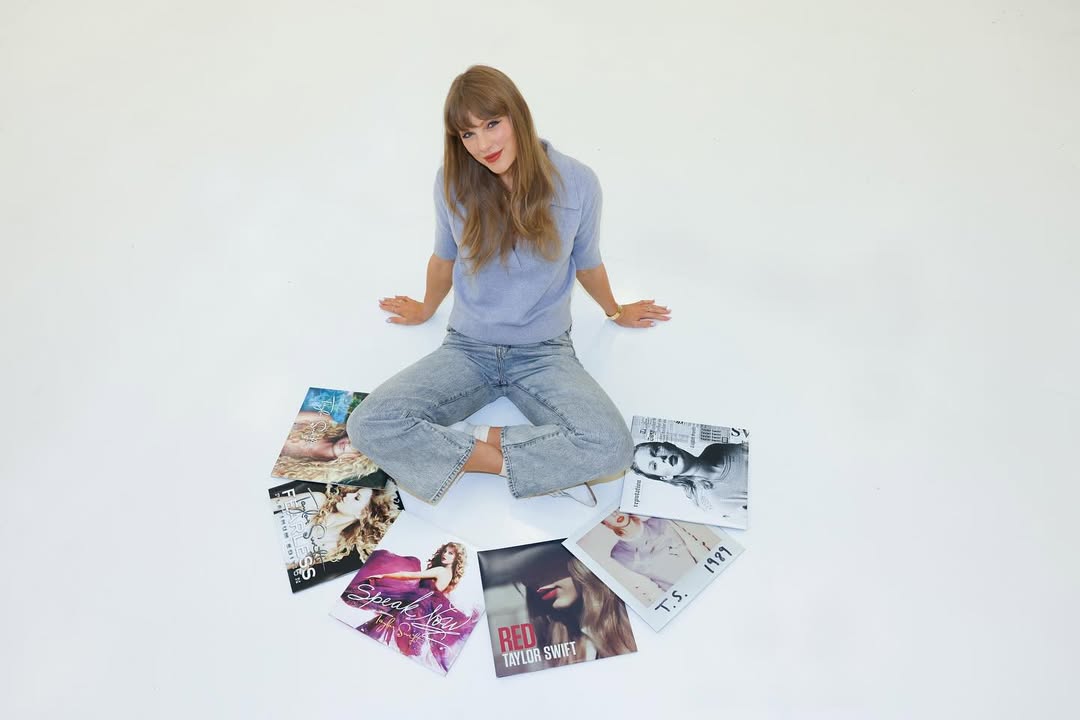
To announce the news, Taylor Swift shared photos of herself holding the covers of her first six albums on Instagram, directing fans to an emotional open letter on her website. In the letter, the 14-time Grammy winner reflected on the significance of this long-awaited victory, describing it as deeply personal and profoundly moving.
“I’ve been bursting into tears of joy at random intervals ever since I found out this is really happening,” she wrote. Acknowledging the years of setbacks and disappointment, she added, “I almost stopped thinking it could ever happen, after 20 years of having the carrot dangled and yanked away.” Swift went on to express her overwhelming sense of gratitude: “All of the music I’ve ever made now belongs to me.”
Looking ahead, Swift also addressed the fate of her remaining re-recordings—Reputation and her 2006 self-titled debut—hinting that they’re still on the horizon. “Those two albums can still have their moments to re-emerge when the time is right,” she wrote. “But if it happens, it won’t be from a place of sadness and longing for what I wish I could have. It will just be a celebration now.”
The Impact: What This Means for the Music Industry
Swift’s successful reclamation of her master recordings marks a pivotal moment in the music industry, setting a powerful precedent and shining a spotlight on the urgent demand for artist rights, ownership, and creative control.
Yet, this victory extends far beyond Swift herself—it is part of a broader movement that is reshaping the entire music landscape. By standing her ground, she has empowered artists across genres to raise their voices, demand transparency, and fight for fairer, more equitable contracts that honor their creative autonomy. This achievement redefines what is possible for legacy artists working within a system long resistant to change.
Ultimately, this moment marks a significant shift in the balance of power, moving control away from traditional gatekeepers—labels and executives—and firmly into the hands of the artists and creators themselves. Conversations about equitable compensation, ownership rights, and artistic control are no longer peripheral issues; they are quickly becoming the cornerstone of the music business as it evolves.
Read Taylor Swift’s full heartfelt letter to her fans, celebrating this monumental victory, now available on her website!
What do you think about Swift’s victory and the future of “Taylor’s Version” releases? Share your thoughts with us on Instagram and X (formerly Twitter)!
For more music news, reviews, and artist insights, head to Lyrical Muse.


Leave a Reply