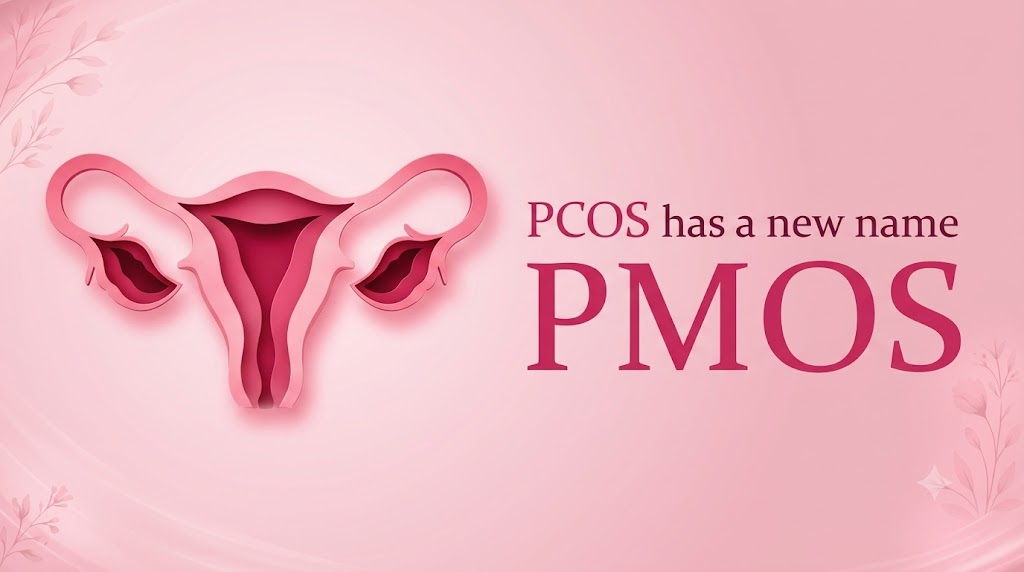
For decades, the name polycystic ovary syndrome (PCOS) has shaped how one of the world’s most common hormonal disorders is understood, diagnosed and discussed.
Now, after more than a decade of international collaboration, the condition has officially been renamed polyendocrine metabolic ovarian syndrome (PMOS). It’s a move that experts say better reflects its complex effects across multiple body systems rather than focusing narrowly on the ovaries.
The new name was announced during the European Congress of Endocrinology in Prague and formally published in The Lancet following a 14-year global consensus process involving clinicians, researchers, patients and advocacy groups from around the world.
What has changed?
The change replaces the long-standing term “polycystic ovary syndrome” with polyendocrine metabolic ovarian syndrome, acknowledging that the condition extends far beyond ovarian health.
The renaming was led by Professor Helena Teede of Monash University alongside an international consortium that included 56 academic, clinical and patient organisations, including the Endocrine Society and the American Society for Reproductive Medicine. The initiative also incorporated extensive patient engagement, with more than 22,000 survey responses helping shape the final decision.
Unlike the previous name, PMOS highlights the condition’s endocrine and metabolic components while retaining recognition of ovarian involvement. It also removes the reference to “cysts”—a term experts have long argued is scientifically inaccurate because many people diagnosed with the condition do not have ovarian cysts.
Why was the name changed?
The decision follows years of growing evidence that the previous terminology no longer reflected current scientific understanding.
Published in The Lancet, the global consensus process concluded that the name PCOS contributed to confusion among patients and healthcare professionals by implying the disorder was primarily an ovarian condition. Researchers noted that the terminology obscured the syndrome’s broader hormonal and metabolic features, delayed diagnosis, fragmented care and reinforced stigma.
The consortium instead prioritised a name that accurately represents the condition’s multisystem nature. “Polyendocrine” acknowledges the involvement of multiple hormone systems, while “metabolic” reflects the well-established links with insulin regulation and broader metabolic health. “Ovarian” remains in the name to recognise reproductive involvement without overstating it.
The group also published related research indicating there is no increase in pathological ovarian cysts associated with the condition, further supporting the removal of the term.
Why does this matter?
The condition affects an estimated one in eight women worldwide, or more than 170 million people globally (The Lancet), making it one of the most common endocrine disorders affecting women of reproductive age.
Experts believe the updated terminology could reshape how the condition is approached in clinical practice, research and public health. By recognising its endocrine and metabolic dimensions, the new name may encourage broader assessment, multidisciplinary care and research priorities that extend beyond reproductive health.
The transition will not happen overnight. A three-year international implementation plan is already underway, with health organisations, researchers, governments and medical educators gradually adopting PMOS. The new terminology is expected to be fully incorporated into the 2028 International Guideline update.
According to the global consortium, the renaming was designed around principles including scientific accuracy, reduced stigma, cultural appropriateness and practical implementation. Rather than changing diagnostic criteria, the update aims to align the condition’s name with decades of evolving scientific evidence and improve understanding across healthcare systems worldwide.
As awareness grows, both PCOS and PMOS are expected to be used interchangeably during the transition period while health systems update guidelines, educational materials and disease classifications.
What are your thoughts on this landmark change? Share your views ith us on X and Instagram, and visit Lyrical Muse for more health and wellness updates.


Leave a Reply