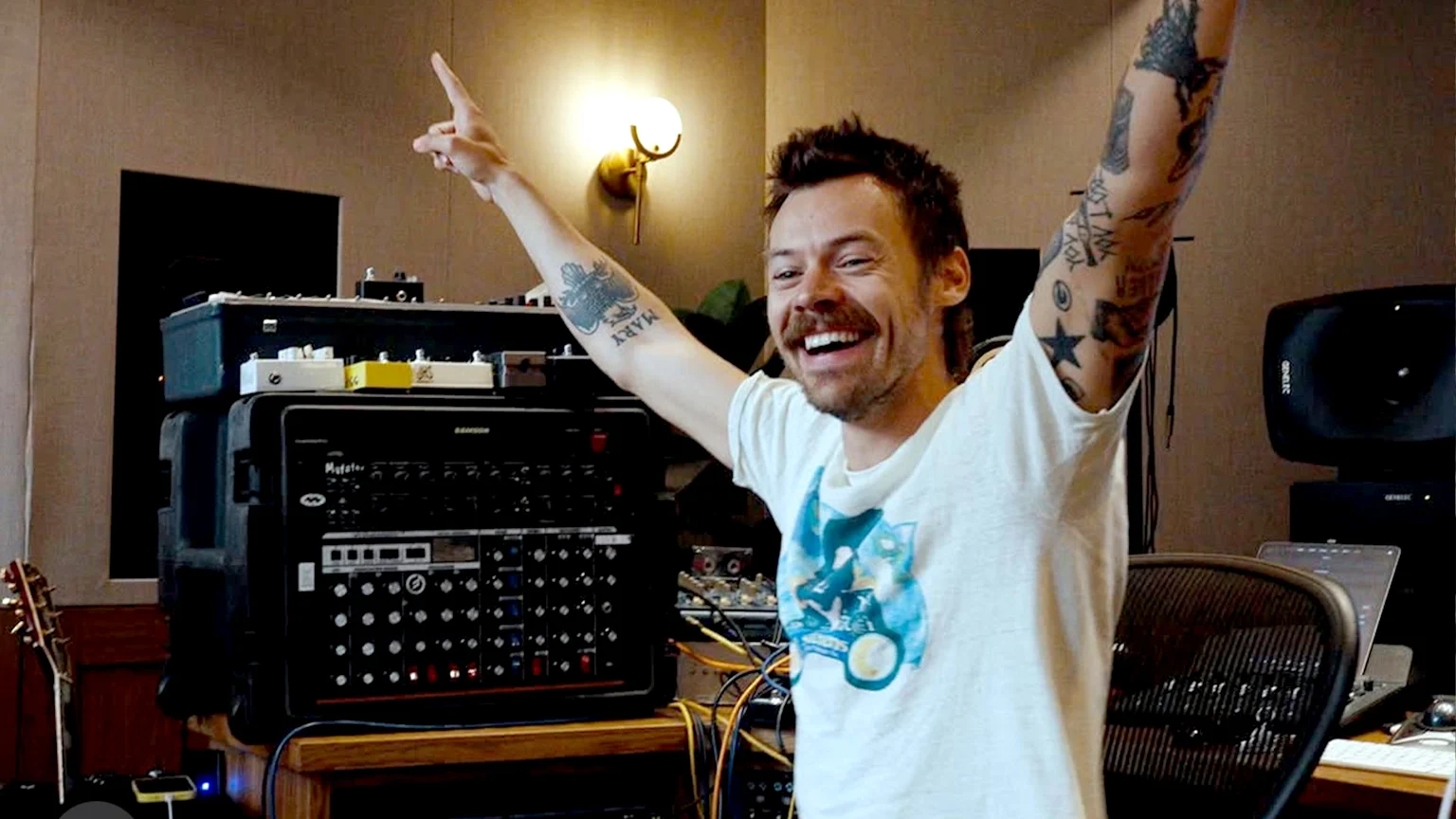
When Harry Styles stepped away after the whirlwind success of Harry’s House, the silence felt unusual. The singer who once lived on tour buses and stadium stages retreated almost entirely from the public eye. For nearly four years, he traded arena lights for a quieter life in Italy, stepping back from the relentless cycle that has defined his career since his teenage years in One Direction.
That pause echoes through every corner of his fourth studio album, Kiss All The Time. Disco, Occasionally. Released on March 6 and quickly nicknamed “Kissco” or KATTDO by fans, the record feels like a deliberate pivot.
Harry Styles does not chase the bright, immediate pop hooks that powered songs like “As It Was.” Instead, he leans into atmosphere, groove, and introspection. The result is an album that unfolds slowly and takes time to grow on you, but reveals remarkable depth once it settles in.
Musically, Kiss All The Time. Disco, Occasionally pulls Harry Styles into unfamiliar terrain. The record draws heavily from 1980s new wave and 1990s house, while weaving in flickers of funk, psychedelic textures, and Britpop warmth. The shift is noticeable from the very first track.
“Aperture,” the album’s opening statement and first single, arrives with pulsing house beats and shimmering synths. The song takes its name from a camera lens control that allows more light into a photograph, and Styles uses the concept as a metaphor for emotional openness.
His refrain about connection and love lands with a gentle clarity. The groove never explodes into a typical pop climax, yet its hypnotic rhythm pulls the listener deeper into the album’s hazy late-night mood.
That sense of reflection continues on “American Girls,” one of the record’s most striking moments. Built around an upbeat bassline and airy instrumentation, the track captures a strange emotional crossroads.
Styles watches the people around him settle into long-term relationships while he remains in motion, traveling the world and living a life few can understand. His voice carries both curiosity and quiet loneliness, turning the song into a thoughtful meditation on growing up in public.
If “American Girls” lingers in introspection, “Ready, Steady, Go!” provides a shot of adrenaline. The track bursts forward with a funky bass groove and restless synths that evoke the thrill of a night just beginning.
Harry Styles leans into flirtation and spontaneity, sketching the chaotic excitement of a fleeting romance. The song ends quickly, almost abruptly, leaving behind the sensation of a moment that burned bright and disappeared just as fast.
Elsewhere, Styles digs deeper into the internal conflicts that have followed him throughout his career. “Are You Listening Yet?” captures that tension perfectly. The track shifts between spoken word and dance rhythms as Styles grapples with competing voices in his head. Therapy sessions, impulsive choices, and self-questioning collide in a chaotic swirl. The song mirrors the messy process of trying to understand yourself when the world never stops watching.
The emotional center of the album often revolves around relationships, though rarely in a straightforward way. “Taste Back” explores the complicated comfort of reconnecting with an old lover. Familiarity draws the two people together again, but uncertainty lingers beneath every line. Styles sounds hopeful yet cautious, aware that nostalgia can blur the truth.
“The Waiting Game” approaches a similar theme from a different angle. Here, the singer recognizes that a relationship no longer serves him, yet he remains trapped in it anyway. The dreamy instrumentals drift like fog, capturing the slow emotional exhaustion that follows when two people stay together simply to avoid loneliness.
Midway through the record, Styles delivers one of the album’s defining moments with “Season 2 Weight Loss.” Sonically adventurous and lyrically sharp, the track feels like a mission statement. Styles examines the pressure of public expectations and questions which thoughts truly belong to him.
Fame has shaped his identity since he was sixteen, and the song acknowledges how difficult it can be to separate the artist from the image built around him. Yet there is confidence in his voice. After years of constant exposure, he finally sounds grounded in himself.
That introspection eventually leads to the album’s emotional peak. “Coming Up Roses” stands as one of the most beautiful songs Styles has recorded. The delicate arrangement floats on gentle strings and hushed vocals, creating the atmosphere of a fragile conversation between two former lovers. The pair attempt to rebuild something that once broke apart, unsure whether their promises hold any real weight. The song feels intimate and cinematic at once, capturing the fragile hope that love might still bloom again.
After such vulnerability, Styles pivots back toward the dancefloor. “Pop” embraces the rush of attraction with infectious disco energy. The track glitters with rhythm and playful lyrics, celebrating the thrill of chemistry without worrying about where it might lead. It is a reminder that Styles can still deliver irresistible pop instincts even when experimenting with new sounds.
“Dance No More” follows with the album’s funkiest groove, though its meaning runs deeper than its playful beat suggests. Styles reflects on the strange position of artists who create music for others yet rarely experience it the same way as listeners. The DJ becomes a performer rather than a participant, caught between authenticity and expectation.
Near the album’s end, “Paint By Numbers” strips the sound back to something more vulnerable. Acoustic guitar and minimal percussion allow Styles to reflect on fame itself. He acknowledges the gratitude that comes with recognition but also the pressure to remain trapped within a specific image. The metaphor of painting inside the lines becomes a quiet protest against those expectations.
The album closes with “Carla’s Song,” a gentle and luminous finale inspired by a moment of sharing music with a close friend. Watching someone discover a beloved record for the first time reminded Styles why music matters in the first place. His voice drifts over soft electronics as he offers a hopeful message: the world still holds endless possibilities, and the songs we create can outlive us.
Taken as a whole, Kiss All The Time. Disco, Occasionally feels less like a collection of singles and more like a reflective journey. Its sound often lives in soft shadows rather than bright stadium lights, trading immediate hooks for atmosphere and emotional honesty. Harry Styles may experiment with house rhythms and electronic textures, but the heart of the album remains deeply personal.
After years of fame that began in adolescence, the singer now stands in a rare position. He no longer needs to prove himself commercially. Instead, he appears interested in something far more challenging: understanding who he is beyond the spectacle.
Kiss All The Time. Disco, Occasionally does not shout for attention. It invites listeners into its world slowly, with patience and curiosity. And once you step inside, the record reveals an artist who continues to evolve while refusing to lose the vulnerability that made him resonate in the first place.
Listen to the album below:
What do you think of Kiss All The Time. Disco, Occasionally? Share your thoughts with us on X and Instagram, and explore more music coverage at Lyrical Muse.


Leave a Reply