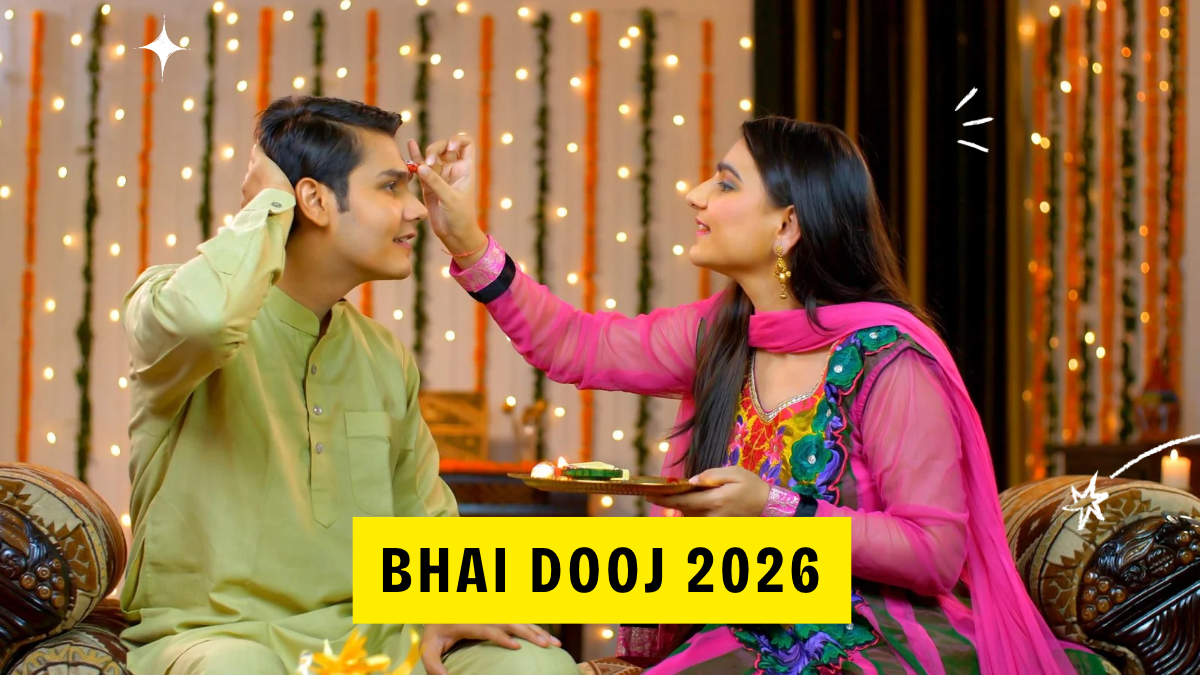
Two days after Diwali, as the festivities begin to wind down, families across India come together for Bhai Dooj, a festival dedicated to the bond between brothers and sisters. Marked by prayers, a ceremonial tilak, homemade delicacies and the exchange of gifts, the occasion celebrates sibling affection and the hope for a long, happy life.
Observed on the second lunar day (Dwitiya) of the bright fortnight of Kartik, Bhai Dooj also brings the wider Diwali festivities to a close. Its name combines bhai, meaning brother, and dooj, referring to the second day. Depending on the region, the festival is also known as Bhaiya Dooj, Bhai Beej, Bhau Beej, Bhai Phonta and Yama Dwitiya.
Why is Bhai Dooj celebrated?
At its core, Bhai Dooj is a simple exchange where sisters pray for their brothers’ well-being and longevity, while brothers reaffirm their affection and support. The central tilak ceremony carries this sentiment, with sisters applying a mark to their brothers’ foreheads and performing an aarti as a gesture of blessing.
The tradition has similarities to Raksha Bandhan, another festival celebrating the sibling relationship. However, Bhai Dooj has its own customs and stories, many of which draw on Hindu mythology. Two legends, in particular, are closely associated with its origins.
The legends behind the festival
One of the best-known stories centres on Yama, the Hindu god of death, and his sister Yamuna. According to legend, Yamuna welcomed Yama into her home with a ceremonial tilak, an aarti and a meal prepared with affection.
Moved by her hospitality, Yama granted her a boon: any brother who receives a tilak and is welcomed by his sister on this day would be blessed with longevity and protection from an untimely death. The story gives the festival another name, Yama Dwitiya.
A second account traces the tradition to Lord Krishna’s visit to his sister Subhadra after defeating the demon Narakasura. Subhadra welcomed him with flowers, sweets and a tilak, marking his victory. Her gesture is believed to have inspired the custom of sisters applying a ceremonial mark to their brothers’ foreheads.
How is Bhai Dooj celebrated?
The day’s rituals vary between households, but the tilak and aarti remain central to most celebrations. Sisters prepare a ceremonial plate, often containing a lamp, vermilion or sandalwood paste, rice grains, flowers and sweets. They apply the tilak to their brothers’ foreheads, perform aarti and offer prayers for their health, prosperity and long life.
The ceremony is usually followed by a scrumptious family meal. Sisters prepare favourite dishes and traditional sweets, while brothers reciprocate with gifts, cash or other tokens of affection. More than the exchange itself, the gesture reflects the care and commitment that the occasion honours.
In some places, the celebrations include ritual baths. Along the Yamuna, particularly in Mathura and Vrindavan, siblings may take a holy dip together in remembrance of Yama and Yamuna.
Regional traditions across India
Bhai Dooj is celebrated under different names and with distinct customs across the country, reflecting the diversity of India’s festive traditions.
- North India: Commonly called Bhai Dooj or Bhaiya Dooj, the festival centres on the tilak and aarti ceremony, followed by family gatherings and festive meals.
- West Bengal: Known as Bhai Phonta, the occasion sees sisters observe a fast before applying a ceremonial mark, traditionally made using sandalwood paste and other ingredients. Conch shells are also blown as part of the celebrations.
- Maharashtra and Goa: Celebrated as Bhau Beej, the ritual includes the brother sitting on a designated square drawn with rice flour. In some communities, he also tastes a bitter fruit called karith before receiving the tilak.
- Odisha: The occasion is known as Bhai Jiuntia and is observed with prayers for brothers’ well-being.
- Nepal: Bhai Tika forms part of the five-day Tihar festival. Sisters apply a colourful seven-hued mark, known as Saptarangi Tika, to their brothers’ foreheads. Among the Newar community, the celebration is known as Kija Puja.
In parts of Maharashtra and Haryana, women who do not have brothers also observe the occasion by performing aarti for the Moon, seeking blessings for their loved ones.
A celebration that goes beyond the ritual
Bhai Dooj is an opportunity for siblings to make time for one another, particularly in families where work, distance and everyday responsibilities can keep them apart. The visit, the shared meal and the familiar rituals offer a reason to reconnect, regardless of how the relationship is celebrated throughout the year.
As the Diwali season draws to a close, Bhai Dooj brings its own kind of warmth to the festivities. Its customs may differ across regions, but the sentiment remains familiar – a celebration of the bond between siblings and the love that continues to hold families together.
How do you celebrate with your siblings? Share your stories with us on Instagram and X, and explore more cultural stories on Lyrical Muse.


Leave a Reply