Our third submission in the ‘Living With It’ series for World Mental Health Month, comes from award winning writer, socially engaged artist and author of participatory poetry collection Natural Wonder Ruthie Collins who writes about how connecting to nature can help our mental health inspired by her interactive project Grow Happy.
For Mental Health Month, the theme ‘Lived Experiences Heard: Real Voices, Real Change’ has been personal.
My job as an artist is to tap into wonder, beauty and restoration – working collaboratively to inspire wellbeing for humans and beyond in response to crisis.

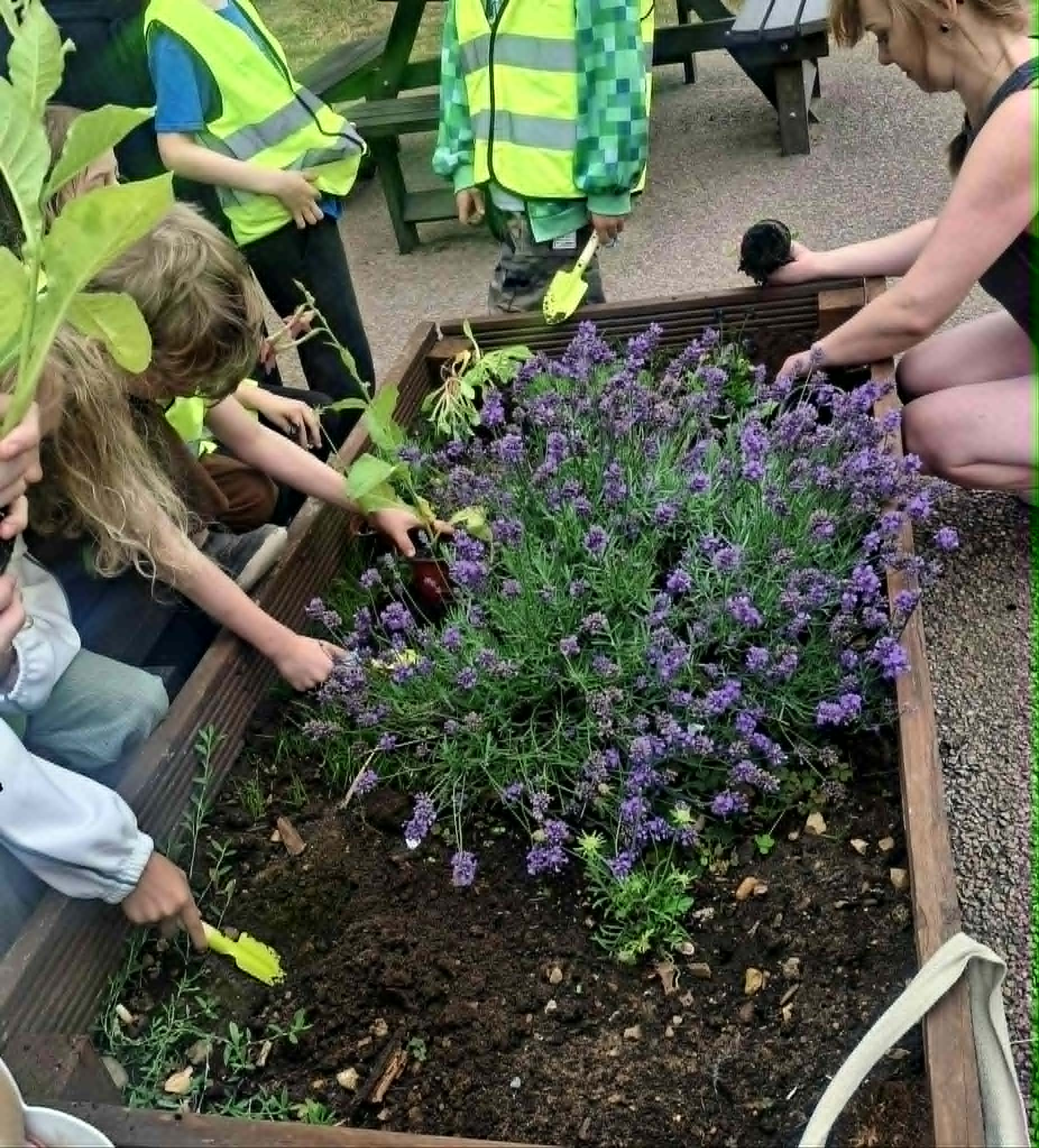
Through participatory poetry collection Natural Wonder, we have been working with seeds and locally grown flowers to support biodiversity with children in Norfolk, ever since I wrote Happiness Is Growing in 2021 as a celebration of flowers in the landscape of Norfolk, the power of restorative ecology and the wild in us all, with support from Arts Council England.
This year we partnered with UEA to focus on creating Happiness Gardens, using seeds harvested by Norfolk Wildlife Trust staff to help restore wildflowers in decline nationally, like Sulphur Clover – children, families and residents coming together to sow, plant and grow to help restore butterflies.
“Wonder, wellbeing and beauty, I noticed, are not just nice to have – but agents for change.”
Poets have shared butterfly inspired poems with us on an interactive map created by artist Rosanne Chaplin – from Norfolk poets such as Patrick Widdess, to works by poets such as Rumi and Emily Dickinson. Children also created butterflies together with Norwich Men’s Shed as part of an art installation at UEA that’s lifting spirits, celebrating initiatives like the Big Butterfly Count, led by Butterfly Conservation.
Fusing poetry with outdoor play and restorative ecology, is powerful – shining light and inspiring a sense of wonder is the embodiment of what Rachel Carson described as ‘the good fairy’ who gifts wonder to children in her posthumously published essay, A Sense of Wonder. Carson, widely seen as the forefounder of the modern environmental movement – knew the power of wonder, creativity and words, too.


I piloted this way of working to support ways to help families after noticing how many felt squeezed out of environmental spaces, because of the impact on child mental health – but also structural equality issues.
During an artist residency at a light festival in Plymouth in 2021, working with light, text and action while COP21 took place, families shared pledges to support the earth in Europe’s first immersive video dome – Gaia. Wonder, wellbeing and beauty, I noticed, are not just nice to have – but agents for change.
Reading is vital. As James Baldwin said, ‘you think your pain and heartbreak are unprecedented in the history of the world – and then you read.’ That shifts us neurologically, increasing wellbeing, but also inspires social cohesion in communities. In often unequal environmental and literary sectors, all are needed to participate and shine light.
“Amidst crisis, the simple power of joy, wonder and beauty – gathering together on the land to restore, cannot be underestimated.”
Collaboration and opportunities for people to come together regardless of belief or background – finding common ground, focusing on restoration and wellbeing of people and planet, that restores mental health and biodiversity, is a form of change-making that can sometimes feel overlooked.
To me, this way of working feels exactly like the kind of ‘glimmers’ that Caitlin Moran encourages us to look for, in her new book How to Be Hopeful: My Year of Living Joyfully.

Add to this a context of children swapping meadows and marshes for screens, time outside in nature plummeting, getting outside and growing together, can be transformative.
When we can be targeted in communities for simply showing empathy, you know that something is imploding at the core of British culture, too. So, connection that cuts through it all – a climate often dominated by monetised outrage, to bring people together and focus on restoration, feels needed more than ever.
“Even in storms, there’s sunshine after the rain – as humans maybe we simply need to come together again, to really feel it.”
As Sheriff of Norwich Dave Shraga said on his visit to us to give recognition from the city of Norwich for our Happiness Gardens, to all involved – nature really is that ‘sunshine’ that streams and uplifts. Amidst crisis, the simple power of joy, wonder and beauty – gathering together on the land to restore, cannot be underestimated.
Even if our seeds of change can provide nourishment for just one butterfly, or one person – helping to inspire belonging, instead of division; or flourishing health, amidst loss – is powerful. Systemic change is also families and children being included in driving that. Connecting and re-becoming part of nature, rather than simply outside of nature – ideas reinforced this month while I’ve been training with Blossom and Berry and as a Mother Nature facilitator.
As author of The Nature Fix: Why Nature Makes Us Happier, Healthier, and more Creative, Florence Williams writes, ‘Go outside, often, sometimes in wild places. Bring friends or not. Breathe.’ Because even in storms, there’s sunshine after the rain – as humans maybe we simply need to come together again, to really feel it.
Thanks to Get Involved Innovation Fund for supporting Grow Happy – and all for helping.
Written by Ruthie Collins | Edited by Malvika Padin
(Images courtesy of Ruthie Collins)
Visit Lyrical Muse for more personal essays and guest contributions.


Leave a Reply