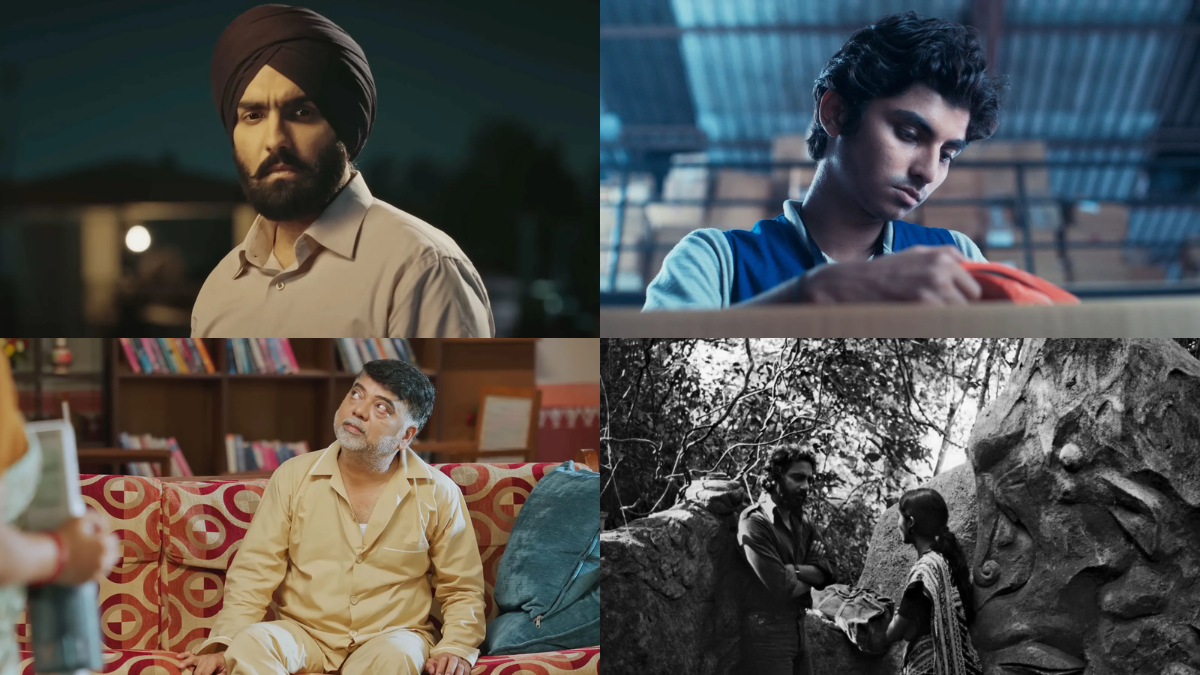
Indian cinema’s relationship with Cannes has evolved sharply over the last few years. What once felt limited to occasional prestige selections has steadily transformed into something broader and far more exciting.
Regional storytelling, formally daring cinema and deeply local narratives are now finding space at the world’s most closely watched film festival.
The 79th Cannes Film Festival continues that momentum. This year’s Indian presence stretches across Punjabi, Malayalam, Gujarati, Hindi and Kannada cinema, while documentaries, student films and restored classics stand alongside newer independent voices.
These selections offer a snapshot of an industry increasingly willing to move beyond formula and toward more personal, politically aware storytelling. Below are six Indian films that are making their mark at ths year’s film festival.
Chardikala
Punjabi cinema takes a significant step onto the global stage with Amarjit Singh Saron’s Chardikala, starring Ammy Virk and Roopi Gill. The film follows a nurse whose life collapses after she is falsely implicated in a major incident, pushing her into isolation and eventually toward helping families struggling with their own crises.
What makes Chardikala particularly interesting within the Cannes ecosystem is its emotional rootedness. Punjabi cinema rarely receives this kind of international spotlight outside diaspora circuits, and Saron’s film arrives carrying both mainstream familiarity and social realism in equal measure.
Amma Ariyan
Few Indian films at Cannes this year carry the historical weight of Amma Ariyan. John Abraham’s landmark 1986 Malayalam film returns in a restored 4K version under Cannes Classics, reintroducing a defining work of India’s parallel cinema movement to contemporary audiences.
The film follows a young activist travelling across Kerala to inform a mother about her son’s death, but its real power lies in everything unfolding around that journey. Grief, political fatigue, youth idealism and post-Emergency anxiety all move through the film with startling clarity. Decades later, Amma Ariyan still feels radical in both form and spirit.
September 21
Karen Kshiti Suvarna’s debut feature September 21 approaches the emotional aftermath of the pandemic through an intimate family lens. Shot in Hindi and Kannada, the film centres on an elderly Alzheimer’s patient convinced his wife remains quarantined nearby, even as his memory deteriorates further.
Rather than reducing the story to illness alone, Suvarna focuses equally on caregiving and emotional exhaustion. The return of an estranged son introduces another layer of conflict, allowing the film to examine responsibility, guilt and familial distance without drifting into sentimentality.
Spirit of the Wildflower
Shrimoyee Chakraborty’s documentary Spirit of the Wildflower may be one of the most politically layered Indian entries at Cannes this year. The film follows two sisters running India’s first legal mahua distillery while navigating entirely different visions of freedom and selfhood.
One dreams of transforming a locally brewed drink into an internationally recognised brand. The other wants to transition and live openly as a man in a society that remains deeply resistant to gender nonconformity. Chakraborty’s film appears to hold both ambitions with equal seriousness, locating questions of identity, labour and autonomy within contemporary rural India.
Shadows of the Moonless Night
Emerging filmmaker Mehar Malhotra enters Cannes through the La Cinef section with Shadows of the Moonless Night, a Punjabi-language student short originally titled Parchave Masseah Rataan De. Set within the suffocating rhythm of industrial labour, the film follows a factory worker slowly unraveling under economic pressure, exhaustion and emotional isolation.
At just 24 minutes long, the film taps into anxieties that feel painfully familiar across urban India today. The story’s focus on sleeplessness, overcrowding and psychological collapse suggests a filmmaker deeply attentive to both atmosphere and class realities.
Balan: The Boy
Following the success of Manjummel Boys, filmmaker Chidambaram heads to Cannes with Balan: The Boy, written by Jithu Madhavan and screening at the Marché du Film. The Malayalam-language film reportedly centres on a young boy navigating abandonment, instability and survival within an unforgiving social environment.
At its core, the film appears interested in fractured familial relationships, particularly the emotional tension between mother and son. Malayalam cinema has long excelled at turning intimate emotional conflict into deeply resonant storytelling, and Balan: The Boy seems poised to continue that tradition.
For more Cannes 2026 coverage, film reviews and festival updates, visit our website and follow us on Instagram and X.
(Featured Images: IMDb/ respective movies’ screenshots)


Leave a Reply