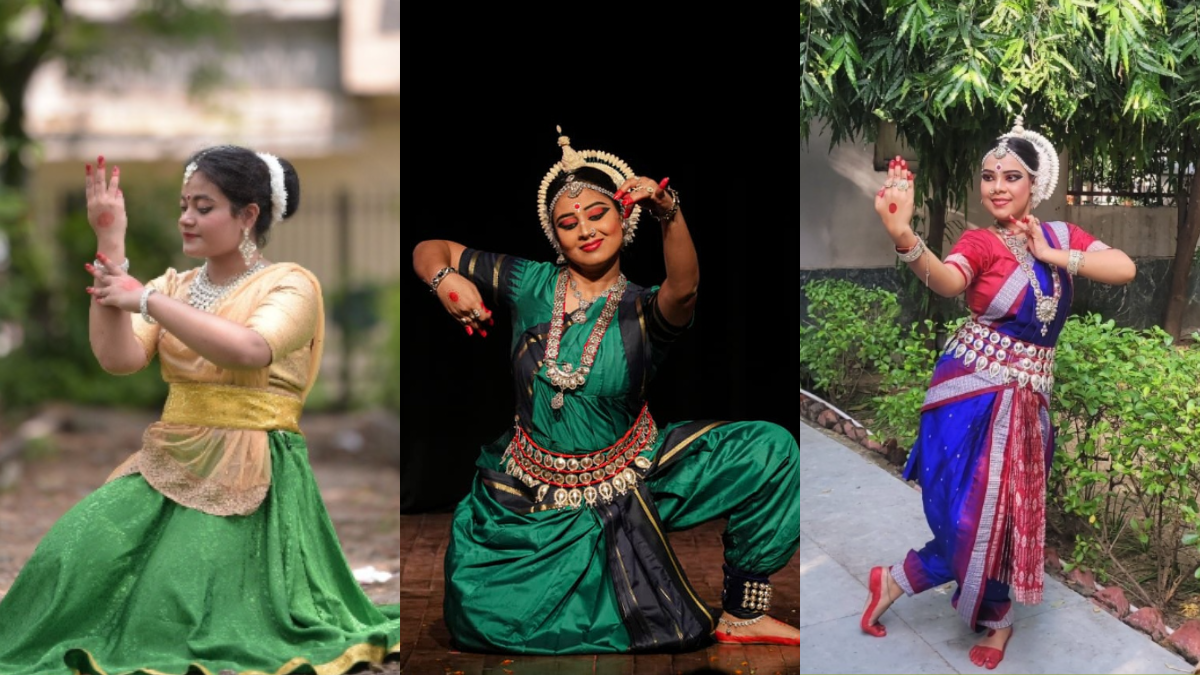
On International Dance Day, it is worth looking beyond the visible grace of performance to the labour, discipline and persistence that sustain it.
Dance, in its most visible form, is designed to look effortless.
A performance may last only a few minutes, at most an hour. The lines appear clean, the expressions precise and the body fully in control. What the audience encounters is a finished moment — refined, rehearsed and resolved. What remains largely obscured, however, is everything that precedes it: repetition, fatigue, doubt and the ongoing negotiation between body and mind.
International Dance Day, celebrated globally each year on April 29, aims to position dance as a universal language — one that transcends geography, politics and cultures. Yet beneath that universality lies a far less visible reality: a sheer discipline that is deeply personal, often solitary and sustained over time with little immediate reward.
For many dancers, that discipline begins long before any performance on the stage, and continues long after it ends.

“What often remains unseen is the discipline that exists alongside joy,” says Mehak Vishwakarma, a Delhi-based dancer exploring semi-classical and freestyle forms. For her, dance is not confined to performance but embedded within daily life. “It lives in the everyday moments where I choose to return to it, even without an audience… that consistency, commitment to showing up, shapes my practice far more than any stage ever could.”
This act of returning and keep “showing up” – without applause and without certainty – is central to what many dancers describe as the real work. It is neither linear nor consistently rewarding, but it is essential.
For Sudharani Geru, an Odissi dancer and assistant trainer, much of that work unfolds away from public view. She points to “the deep emotional and mental discipline behind every movement,” shaped through “hours of silent practice, self-correction, and moments of self-doubt”. “Odissi is not just a dance form for me — it is a spiritual connection that requires patience, devotion, and inner strength,” she notes.
The labour is not only physical; it is also internal. It involves sustained attention, critical self-reflection and an ongoing recalibration of one’s own standards. That internal process is equally central for Pradnya Jadhav, who describes the unseen dimension of dance as a continuous mental dialogue.


“Everyone notices the performances… but not the self-doubt, the constant need to improve, or the discipline it takes to keep going even when I don’t feel my best,” she says. Much of her work, she notes, takes place away from performance — “replaying steps in my head” and working towards incremental progress.
If the stage is where dance is consumed, the practice space is where it is built, and often, where it is most fragile.
Despite its associations with passion and expression, dance does not remain immune to pressure. There are moments when it shifts in meaning, becoming obligation rather than release.
For Vishwakarma, that shift came when academic pressures began to collide with her practice. “Dance started to feel like something I had to fit into an already overwhelming schedule rather than something I could freely immerse myself in,” she recalls. The ease she once associated with it began to erode, prompting a temporary withdrawal that allowed her to reassess her relationship with the form beyond deadlines and demands.
Such experiences are not uncommon. Increasingly, dancers today operate across overlapping structures: education, employment and training, each competing for time and energy.
Arohi Bhargava, a Kathak practitioner with over 15 years of training, describes this as a “constant high-pressure act of trying to excel in two different worlds at once.” She recalls a particularly intense period during her school years: “I spent the morning sitting for a high-stakes academic practical, only to rush off in the evening for my Kathak final term examination. In those moments, dance stopped feeling like an escape and started feeling like a heavy obligation.”

The notion of dance as escape, often romanticised and invoked in cultural discourse, begins to unravel here. What remains is a practice that demands sustained commitment, often without the structural support afforded to more conventional career paths.
Even where external pressures are less acute, internal expectations can exert their own influence. Aallya Sahai, a Delhi-based dancer, describes the tension of self-imposed standards. “I tend to break under the pressure of trying to look a certain way in my dancing,” she says. Letting go of that compulsion, she adds, has allowed her body to feel “more open and comfortable.”
In this sense, discipline extends beyond technique. It encompasses the management of expectation, both external and internal, and the capacity to sustain engagement without immediate validation.
That question of sustainability, however, is not only artistic; it is also economic, as beyond passion and practice, there is the question of livelihood.
“One such aspect is that dancers aren’t really paid well according to their performance,” says Jahnavi Dureja, a Doordarshan-graded Odissi and Bharatanatyam artist. “For the spectators it might just be a performance of 30 minutes or an hour, but what goes behind are years completely dedicated to rigorous training and discipline.”

Her observation points to a broader disparity between the time invested in the art form and the returns it offers. The labour is cumulative; the recognition, often intermittent.
Bhargava echoes this, describing the profession as one that demands a “rigorous, unforgiving schedule” while offering limited financial stability through performance alone. “The stage rarely offers a handsome living,” she notes. For many, sustaining a career requires diversification — from teaching, directing or other forms of engagement that allow the practice to continue while remaining viable.
Geru, who balances her academic studies with her role as an assistant trainer, describes her routine as a continuous negotiation between learning, teaching and evolving as an artist. “Dance, for me, is both a responsibility and a lifelong pursuit,” she says.
For others, sustainability is less structured but no less deliberate. Vishwakarma describes it as maintaining continuity — “keeping that connection alive”, even if through small, daily acts of movement. Jadhav echoes this emphasis on consistency, describing the importance of “showing up regularly” even in the absence of certainty about long-term direction.


Across these accounts, a common pattern emerges. To be a dancer today is to manage not only the demands of technique, but those of time, labour, and livelihood. It is to operate within a framework that requires adaptability as much as dedication.
And yet, despite these constraints, dancers continue to return to the practice, to the stage. Not always with ease, or clarity, but with persistence. On days when motivation is low, the reasons for that return differ, but the impulse remains consistent.
For Vishwakarma, it is a memory of her younger self, “a kind of honesty and wonder” she seeks to preserve. For Geru, it is a reconnection with her Guru, her training, and the faith placed in her by her family. For Sahai, it is the influence of her teachers, whose dedication reminds her that “dance is not just about choreography or steps — dance is life itself.”

Bhargava traces her return to something more personal: her mother. “She has been the backbone of my journey… my constant reminder to stay focused,” she says of her mother. For Dureja, the relationship is instinctive. “Dancing is like drinking water,” she explains. “We might not drink litres every day, but we do quench the thirst.”
Even at its most minimal, the act of returning matters. As Jadhav notes, “Even if I don’t feel like doing a full practice, I start small… and once I begin, the love comes back.” It is through these small, repeated gestures — largely unseen and rarely acknowledged — that discipline takes shape. It is sustained not through force, but through continuity, and exists less in performance than in the practice itself.
If International Dance Day celebrates movement as a universal language, it is also important to recognise what sustains that language beyond the stage. It is not only talent or passion, but a discipline developed over time, carried into daily practice and rarely visible in its entirety. While the performance may conclude, the work that underpins it continues.
(Image & Quotes: Courtesy of Mehak Vishwakarma, Sudharani Geru, Aallya Sahai, Pradnya Jadhav, Jahnavi Dureja, Arohi Bhargava)
If dance has ever been part of your life in any form we’d love to hear what it means to you. Join the conversation on X and Instagram, and follow Lyrical Muse for more such exciting coverage.


Leave a Reply