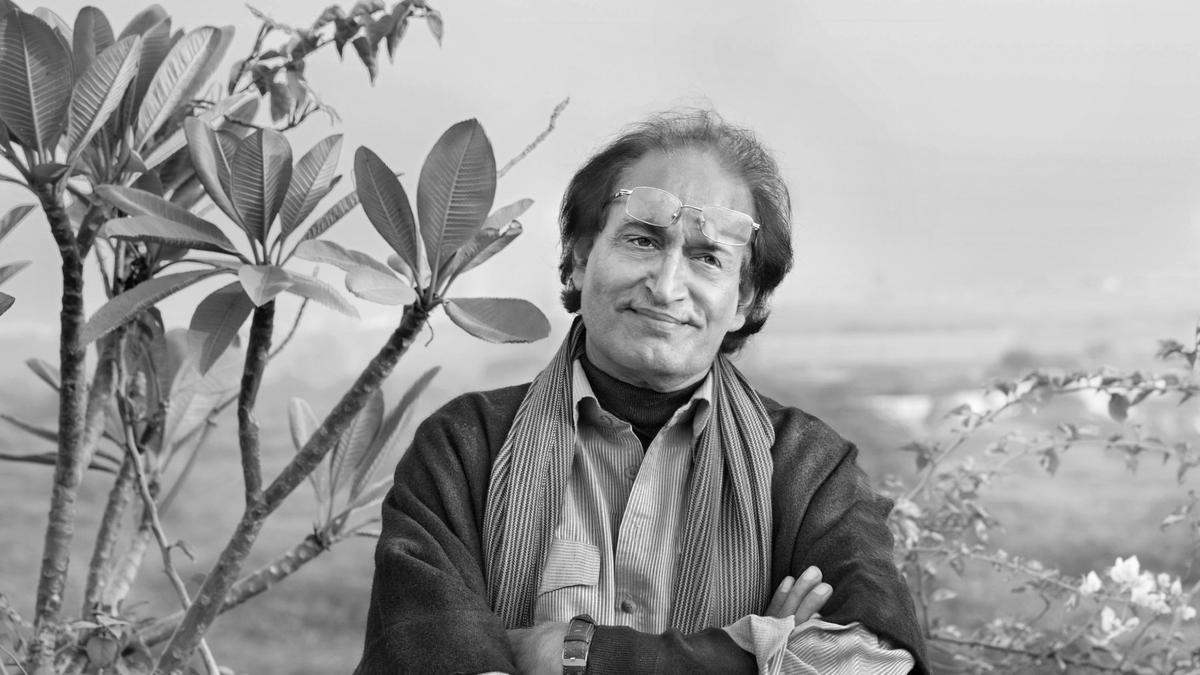
India’s photojournalism lost one of its most influential practitioners on Sunday with the death of Raghu Rai in New Delhi. Rai, whose images shaped the visual memory of a nation across decades, died at 83 after a prolonged battle with prostate cancer.
According to his family, Rai was first diagnosed with cancer, later developed complications as the illness spread, and had recently been dealing with additional age-related health issues. He is survived by his wife Gurmeet Rai, his son Nitin, and daughters Lagan, Avani and Purvai.
Rai’s career, which began almost by accident, went on to alter the trajectory of documentary photography in India. Trained as a civil engineer, he turned to photography at 23 in 1965. Within a year, he joined The Statesman as chief photographer, beginning a body of work that would document India’s political upheavals, quiet intimacies and everyday life with unusual clarity.
His early promise drew the attention of Henri Cartier-Bresson, who nominated him to prestigious Magnum Photos in 1977. The endorsement placed Rai among a select group of globally recognised photographers and helped bring international focus to Indian photojournalism at a time when it remained underrepresented.
Rai’s work resisted spectacle, leaning instead on observation. His images often carried multiple narratives within a single frame, capturing both the scale of events and their human detail. From the refugee crisis during the Bangladesh Liberation War to the aftermath of the Bhopal Gas Tragedy, his photographs did not merely record events; they shaped how they would be remembered. He also produced widely recognised portraits of celebrated figures including Mother Teresa, Indira Gandhi, Dalai Lama and Raj Kapoor.
In 1972, he received the Padma Shri for his coverage of the Bangladesh war, among the earliest recognitions of photojournalism as a vital form of reportage in India. Two decades later, his work for National Geographic earned him the “Photographer of the Year” title in the United States, affirming his international standing.
Over the years, his images appeared in leading publications including Time, Life, The New York Times, Le Monde and The New Yorker. He was later awarded the Officier des Arts et des Lettres by the French government in 2009 and received the Académie des Beaux-Arts Photography Award in 2019. The Government of India conferred a Lifetime Achievement Award on him in 2017.
Rai’s influence extended beyond individual photographs. At India Today, during its formative years, he played a key editorial role in shaping visual journalism. As Picture Editor, Visualiser and Photographer, he developed photo essays that treated images as primary narratives rather than supplements to text, influencing generations of photographers and editors.
His portraits matched the impact of his reportage. Rai worked closely with his subjects, often waiting for moments that revealed vulnerability over authority. The outcome was imagery that felt both intimate and historically significant. He also authored more than 50 books, building an extensive visual archive of India’s social, political and cultural life.
Among his best-known works are Raghu Rai’s India: Reflections in Colour, Reflections in Black and White, Delhi: A Portrait, The Sikhs, and Faith and Compassion: The Life and Work of Mother Teresa. His long-form documentation of the Bhopal disaster resulted in Exposure: Portrait of a Corporate Crime, later exhibited internationally.
Rai exhibited his work widely, including retrospectives at the National Gallery of Modern Art in New Delhi and showcases across London, Amsterdam, Rome and Arles. He also served on the jury of the World Press Photo contest and UNESCO’s international photography competitions.
Rai remained active into his later years, continuing to photograph and work on new publications. His archive, spanning decades, stands among the most comprehensive visual records of independent India and helped establish a distinctly Indian voice in global photojournalism.
His death marks the end of a career that paralleled much of independent India’s history. More than a chronicler, he interpreted its complexities. Though he no longer stands behind the lens, his work continues to inform and inspire.
Share your thoughts and memories with us on X and Instagram. For more in-depth reporting on culture, media and the arts, visit Lyrical Muse.
(Featured Image: Courtesy of Raghu Rai Instagram)


Leave a Reply