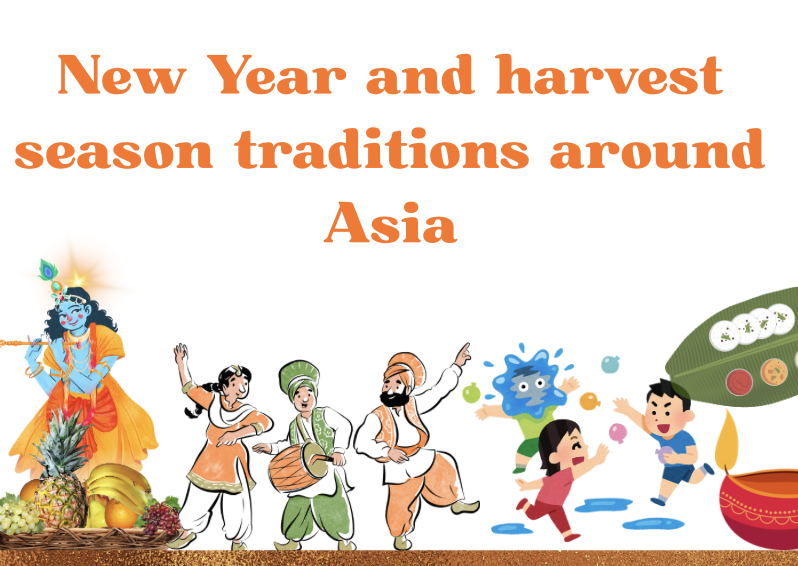
Across India and parts of Southeast Asia, the month of April marks more than just a change in season. It signals a shared moment of renewal, where harvest, faith and new beginnings come together in different cultural expressions.
From Punjab and Manipur to Arunachal Pradesh, Myanmar, Thailand, Cambodia and more, the festivals may be named differently and look different culturally, but they all carry the same quiet idea of starting over.
Baisakhi (Punjab)
Baisakhi (or Vaisakhi) will be celebrated on April 14, marking the harvest season and the Solar New Year across Punjab and parts of North India. For Sikhs, it also commemorates the formation of the Khalsa Panth in 1699 by Guru Gobind Singh.
The festival blends devotion with vibrant cultural celebration. Devotees visit Gurudwaras, listen to hymns from the Guru Granth Sahib, participate in Nagar Kirtans filled with music and collective prayer. Community service is an important part of the day, with langars offering free meals to everyone. Bhangra, Gidda, fairs and festive food add to the atmosphere.
Baisakhi also carries historical resonance due to its association with the Jallianwala Bagh massacre, making it a day that balances celebration with remembrance, while reflecting themes of unity, resilience and renewal.

Puthandu (Tamil Nadu)
Puthandu or Tamil New Year marks the first day of the Tamil month of Chithirai, usually falling on April 14. Symbolic of a fresh start and prosperity, the harvest festival holds both cultural and religious significance for the people of Tamil Nadu, who celebrate the day with their family along with special food, temple visits and offering money to each other to mark an auspicious transaction of the new year.
Cheiraoba (Manipur)
Cheiraoba, the Manipuri New Year, will also be observed on April 14, mainly by the Meitei community. Based on a traditional lunisolar calendar, which places the start of the year in Sajibu (March–April), it aligns with spring and the start of a new agricultural cycle.
The celebrations stay close to home. Families clean their houses, prepare traditional meals offered first to deities, and gather quietly to share food and prayers. A unique ritual involves climbing nearby hills, symbolising growth and moving forward in the year ahead.
Sangken (Arunachal Pradesh)
Sangken begins on April 14 and continues for three days in Arunachal Pradesh, marking the traditional New Year for Theravada Buddhist communities like the Khampti and Singpho tribes.
Water lies at the heart of Sangken festival. Devotees ceremonially bathe idols of Gautama Buddha, placing them in temporary shrines where scented water is poured as an offering. The same water is later sprinkled on each other as a gesture of cleansing and renewal.
Alongside this, communities gather for prayers, temple visits, folk dancing, homemade sweets and simple moments of togetherness.
Vishu (Kerala)
In Kerala, the tradition New Festival is known as Vishu and is usually celebrated on April 14 or 15 to mark the the start of the agricultural season. From a religious standpoint, Vishu is celebrated It is celebrated as the day Lord Krishna killed the demon Narakasura as well as as the day Lord Surya returns to rise from the east.
Rooted in prosperity, renewal and the victory of light over darkness, Vishu is a vibrant celebration spanning traditions such as Vishukkani – an auspicious arrangment of yellow flowers, gold and rice which is the “first sight” upon waking up on Vishu Day – as well as elders giving money as a blessings called Vishu Kaineettam alongside a scrumptious meal of traditional dishes.

Aluth Awurudda (Sri Lanka)
One of Sri Lanka’s most significant cultural festivals, the Sinhala and Tamil New Year is known as Aluth Awurudda in Sinhala and Puthandu in Tamil. Typically falling on April 13 or 14, the festival is guided by astrological timings and involves several traditions including observing a Punya Kalaya where all work stops to honour the transitional period from old to new. A spread of festive foods known as Avurudu table is also on offer alongside playing traditional games.
Thingyan (Myanmar)
Myanmar’s traditional New Year festival Thingyan starts on April 13, and unfolds over four to five days. It is one of the country’s biggest celebrations, rooted in Buddhist traditions, combining festivity with spiritual practice.
Across cities like Yangon, streets turn into water-filled open spaces where people splash each other using buckets, hoses and water guns, to wash away the past year’s sins and misfortunes to welcome a fresh start.
Temporary stages, music, dance and community gatherings add to the festive atmosphere. Alongside this, Thingyan also carries a spiritual side, with many visiting monasteries, offer alms, release fish and birds, and pay respect to elders through simple rituals like washing their hands or feet.
Songkran (Thailand)
Known as the world’s largest water festival, the traditional Thai New Year known as Songkran is celebrated annually from April 13 to 15. Marking transformation and fresh start, the festival is traditional, community-led and celebratory in equal parts spanning rituals such as water purification and merit-making as well as the popular “water war” where locals and tourists come together for a joyous water fight.
Naya Barsha (Nepal)
Nepal’s New Year which is known as Naya Barsha or Baisakh 1, marks the first day of the Bikram Sambat (BS) calendar, which is about 56-57 years ahead of the Gregorian calendar.
Usually celebrated on April 13 or 14, the celebrations spans festive feasts, family reunions as well as plenty of dance and music.
Pana Sankranti (Odisha)
Pana Sankranti (or Maha Bishuba Sankranti), observed on April 14, marks the Odia New Year and the beginning of summer. It is also linked with Hanuman Jayanti, with devotees visiting temples dedicated to Hanuman.
A key tradition is drinking pana, a cooling mix made with bael fruit, curd, spices and coconut. Other traditions include community fairs, folk performances and rituals like Basundhara Theki, where water slowly drips from an earthen pot onto a sacred plant, reflecting continuity and life.

Bohag Bihu (Assam)
The Assamese New Year known as Bohag Bihu or Rongali Bihu which marks the arrival of spring and the start of the seeding season typically spans seven days – known as Saat Bihu – with each day rooted in specific traditions.
Beginning on April 14, which is dedicated to cattle, followed by the actual New Year day called Manuh Bihu, the festival also spans worship, traditional food and bihu dance performances.
Poila Baisakh (West Bengal)
Poila Baisakh (also known as Pohela Boishakh) will be celebrated on April 15, marking the Bengali New Year. It is widely observed in West Bengal, Bangladesh and among Bengali communities worldwide.
The celebrations are vibrant and familiar. People wear traditional attire, decorate homes with alpana and take part in processions like Probat Pheri. Families gather over meals, while businesses begin Haal Khata, opening new account books for the year, symbolising a fresh start.
Simple at its core, Poila Baisakh brings together faith, food and festivity, offering a reset that feels both personal and collective as the new year begins.

Khmer New Year (Cambodia)
Khmer New Year, or Choul Chnam Thmey, one of the country’s biggest holidays, runs from April 14 to 16 and marks the end of the harvest season in Cambodia.
The three days each carry their own meaning. The first, Moha Sangkran, marks the arrival of the new year with temple visits and offerings. The second focuses on giving, as people donate to the less fortunate and spend time with family. By the third day, the tone softens into ritual cleansing, with people washing Buddha statues and gently pouring water on elders as a sign of respect and good wishes.
Beyond the celebrations, the festivities extend into games, music and festive food like kralan, a rice-based delicacy cooked in bamboo, keeping the focus on togetherness and fresh beginnings.

Pi Mai (Laos)
Known as Pi Mai or Boun Pi Mai, New Year in Laos is a three-day celebration usually celebrated between April 14-16. Marking the start of monsoon, the festival involves a vibrant array of traditions and rituals including water purification and making sand stupas, parades and even a tradition of an annual beauty pageant.
Satuan (Bihar)
Satuan or Mesh Sankrati is the traditional New Year in Bihar, Jharkhand and eastern Uttar Pradesh. Marking the new harvest, the day is one of charity as well as the worship of the Sun God. Eating sattu (gram flour) also holds significance on the day. The day after Satuan is celebrated also as Judha Sheetal or Maithili New Year.
(Images and videos all belong only to owners)
Words by Malvika Padin and Khushboo Malhotra
Did you know about all these different traditional New Year celebrations around Asia? Visit Lyrical Muse for more cultural explorations.


Leave a Reply