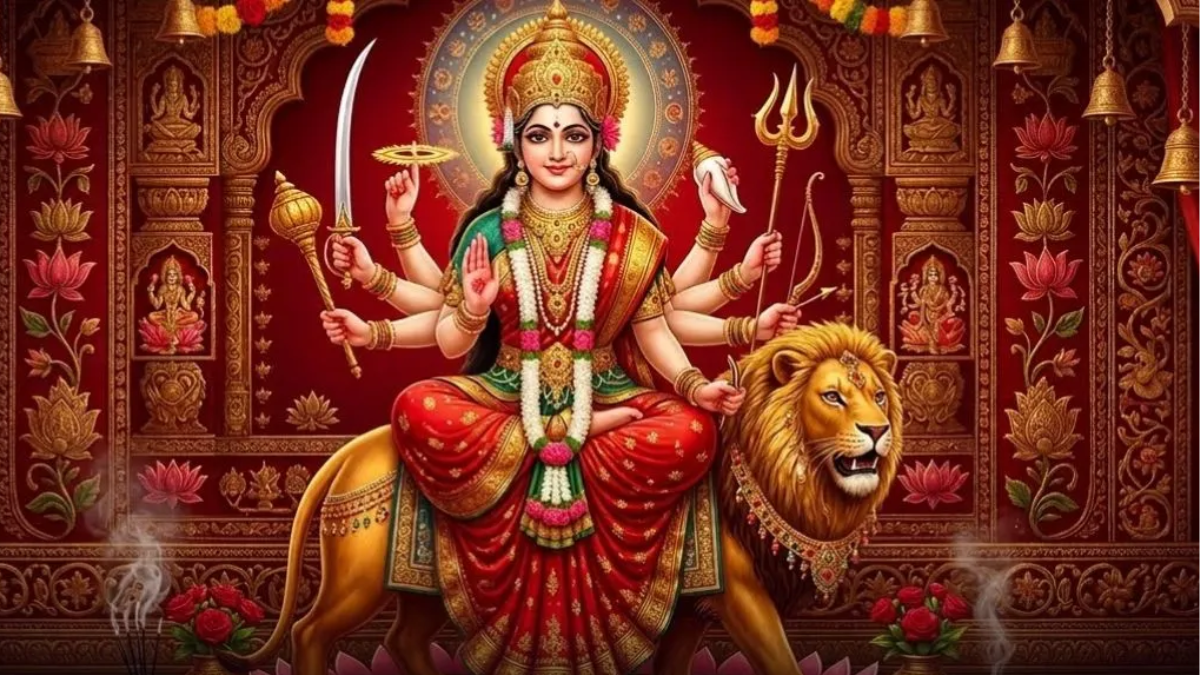
As spring unfolds across India, Chaitra Navratri returns as one of the most spiritually significant festivals in the Hindu calendar. Celebrated over nine sacred days, the festival honours the divine feminine in the form of Goddess Durga and her nine manifestations, while marking the beginning of the Hindu lunar new year.
In 2026, Chaitra Navratri begins on Thursday, March 19 and concludes on Friday, March 27 with Ram Navami, the birth anniversary of Lord Ram. Observed with fasting, prayer and quiet devotion, the festival offers a moment of reflection, discipline and renewal at the threshold of a new year.
What is Chaitra Navratri?
Chaitra Navratri, also known as Vasanta Navratri, is dedicated to the worship of Goddess Durga in her nine forms, collectively called Navdurga. The festival symbolises the victory of good over evil, rooted in the mythological story of the goddess defeating the demon Mahishasura after a nine-day battle.

It also marks the beginning of Vikram Samvat 2083, aligning with regional New Year celebrations such as Gudi Padwa in Maharashtra, Ugadi in Karnataka and Andhra Pradesh, and Navreh in Kashmir. The festival coincides with the arrival of spring, making it both a spiritual and seasonal transition – a time when devotees cleanse the body, mind and home in preparation for a fresh start.
More than ritual, Chaitra Navratri represents a journey inward, encouraging discipline, patience and devotion while reinforcing the belief that faith and righteousness ultimately prevail.
What are the key dates for Chaitra Navratri 2026?
The festival follows a structured nine-day calendar, with specific rituals and timings observed by devotees.
- Start Date (Pratipada): March 19, 2026 (Ghatasthapana Muhurat: 6:52 AM to 7:43 AM IST)
- Ashtami Poojan: March 26, 2026
- Ram Navami: March 27, 2026
Ghatasthapana, the ceremonial installation of the sacred Kalash, marks the formal beginning of the festival and symbolises the presence of the goddess in the home.

According to traditional beliefs, in 2026 the goddess is said to arrive on a palki (palanquin) and depart on an elephant, a combination considered auspicious and associated with stability, grounded effort and prosperity in the year ahead.
What do the nine days of Navdurga represent?
Each day of Chaitra Navratri is dedicated to a different form of Goddess Durga, representing various aspects of strength, wisdom and protection.
- Day 1 – Maa Shailputri: Strength and stability
- Day 2 – Maa Brahmacharini: Devotion and penance
- Day 3 – Maa Chandraghanta: Courage and peace
- Day 4 – Maa Kushmanda: Creation and energy
- Day 5 – Maa Skandamata: Motherhood and protection
- Day 6 – Maa Katyayani: Warrior power and determination
- Day 7 – Maa Kaalratri: Destruction of fear and negativity
- Day 8 – Maa Mahagauri: Purity and serenity
- Day 9 – Maa Siddhidatri: Spiritual wisdom and fulfilment
This progression symbolises a spiritual journey — from grounding oneself in faith to ultimately achieving clarity and enlightenment.

How do devotees observe Chaitra Navratri at home?
The festival is typically observed through fasting, prayer and disciplined daily rituals. Homes are cleaned and decorated, and many families maintain an Akhand Jyoti, a lamp that burns continuously for nine days, symbolising the triumph of light over darkness.
During Navratri, barley seeds (jau or javara) are sown in a clay pot on the first day in a ritual known as Khetri or Rujwan, symbolising prosperity, spiritual growth and the nurturing power of Goddess Durga, with the sprouting seeds believed to indicate abundance and a fortunate year ahead.

Fasting rules vary, but most devotees follow a sattvic diet, avoiding grains, meats, onion and garlic while consuming fruits, dairy and special flours such as kuttu and singhara. The eighth or ninth day is marked by Kanya Pujan, where young girls are worshipped as living forms of the goddess and offered food and gifts.
Fasting is not just a religious practice; it also represents self-control and inner purification. Observed during the seasonal shift from winter to summer, it encourages detoxification, mindful living, and spiritual cleansing through discipline and prayer.

For many families, the festival is as much about devotion as it is about quiet domestic rituals and shared faith.
Nina Arora, a homemaker based in Indore, describes the atmosphere at home during the nine days:
“Chaitra Navratri is always a deeply peaceful time in our house. I fast for all nine days, wake up early for aarti, and keep the home simple and calm. It feels like a spiritual reset every year – less about grand celebrations and more about devotion, discipline and gratitude… and by the time Ram Navami arrives, when we do Kanjak Poojan at our house, there is a sense of lightness and renewal in the entire household.”
Her reflection mirrors the experience of many devotees who see the festival not as a spectacle but as a personal spiritual commitment.
Why is Chaitra Navratri quieter than Sharad Navratri?
Unlike the widely celebrated autumn Navratri before Vijayadashami, which brings large public festivities and garba celebrations, Chaitra Navratri is more introspective and prayer-focused. Devotees use this quieter period for fasting, disciplined rituals and inner reflection, which holds special significance in Shakta spiritual practices.
Even in modern urban life, this calm and disciplined devotion continues to shape Chaitra Navratri’s timeless message: renewal begins from within. As spring marks the start of the Hindu New Year, the nine days guide devotees toward spiritual balance and emotional clarity.
Share your thoughts and personal Navratri traditions with us on X, and for more culture-led explainers and festival stories, visit Lyrical Muse.
(Image Credits: Courtesy of Khushboo Malhotra and Gemini AI)


Leave a Reply