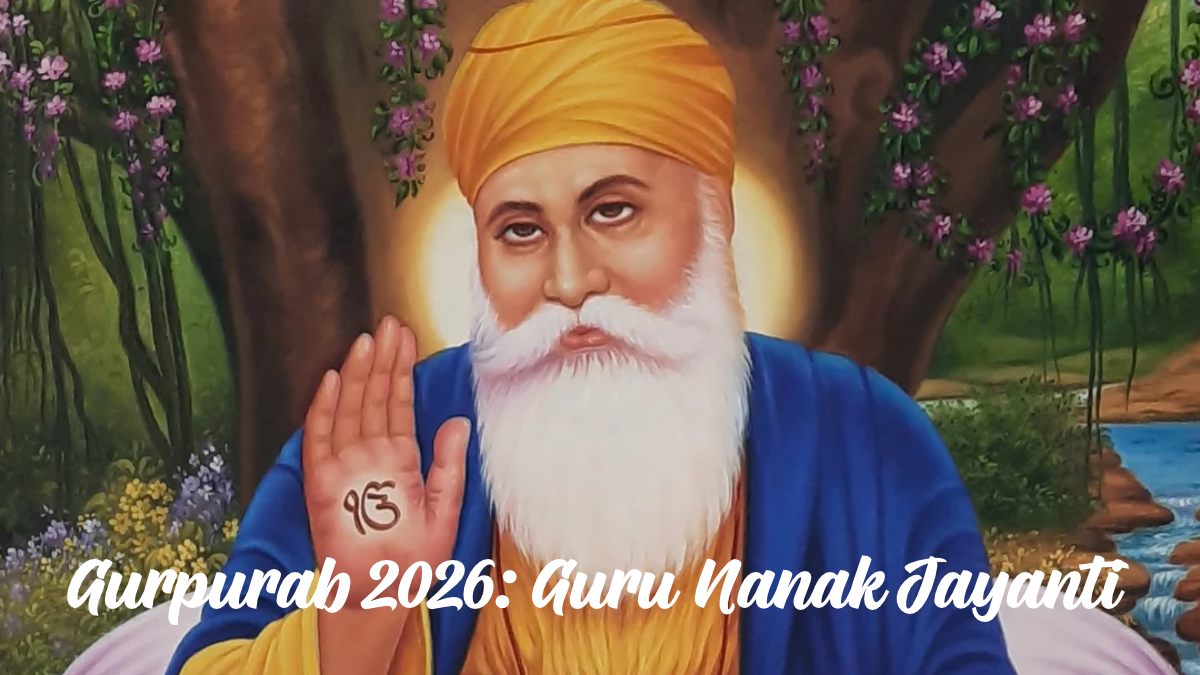
Guru Nanak Jayanti, one of the most significant observances in Sikhism, falls on Tuesday, November 24, 2026. Also known as Gurpurab or Prakash Purab (Prakash Parv), the festival marks the 557th birth anniversary of Guru Nanak Dev Ji, the founder of Sikhism and the first of its ten Gurus (mentors).
Observed on Kartik Purnima, the full moon day of the Hindu month of Kartik, Gurpurab brings Sikh communities together to remember Guru Nanak Dev Ji’s life and teachings. The occasion is marked by prayers, devotional singing, processions and community meals at gurdwaras in India and across the world.
Who was Guru Nanak Dev Ji?
Guru Nanak Dev Ji was born in 1469 at Rai Bhoi di Talwandi, a village in Punjab now known as Nankana Sahib in present-day Pakistan.
From an early age, he showed a keen interest in spirituality. At the age of 30, following a divine revelation, he began travelling to share his message of devotion to one God (Ek Onkar, also spelled Ik Onkar, ੴ), equality and universal love.
He spoke against caste distinctions and social divisions, encouraging people to earn an honest living, speak the truth and serve others without expecting anything in return.
His teachings became the foundation of Sikhism and found a lasting place in the Guru Granth Sahib, the faith’s sacred scripture. Guru Nanak Dev Ji composed 974 hymns, or shabads, which form part of the scripture.
Written in Gurmukhi, these verses express his belief in one God, the value of honest work, sharing with others and devotion rooted in the heart.

What is the significance of Gurpurab?
The word Gurpurab refers to an anniversary associated with a Sikh Guru, commemorating significant milestones in their life.
Guru Nanak Gurpurab, also known as the birth anniversary of Guru Nanak Dev Ji, honours the founder of Sikhism and the first of the ten Sikh Gurus. The occasion offers devotees an opportunity to reflect on his teachings, which centre on the oneness of God, equality, humility and compassion.
These values find expression in three fundamental principles of his spiritual message: Naam Japo, the remembrance and meditation of God’s name; Kirat Karo, earning an honest livelihood through hard work and integrity; and Vand Chakko, sharing one’s earnings and resources with others,

How is Guru Nanak Jayanti celebrated?
Gurpurab celebrations often begin several days before the festival, with gurdwaras organising an Akhand Path, the uninterrupted recitation of the Guru Granth Sahib, which is traditionally completed over 48 hours.
Devotees gather for prayers, listen to Gurbani and take part in Shabad Kirtan, the singing of devotional hymns. In the days leading up to Gurpurab, many communities also hold Prabhat Pheris, early-morning processions during which devotees sing hymns as they move through local neighbourhoods.
On the day itself, Nagar Kirtans bring communities together in processions filled with devotional singing. Often led by the Panj Pyare (the Five Beloved Ones), these processions carry the Guru Granth Sahib in a decorated palanquin and are accompanied by devotees singing hymns along the way.

Another important part of the celebrations is Langar, the free community meal served at gurdwaras. Prepared and served by volunteers, the meal is open to everyone, irrespective of religion, caste or social background. Beyond feeding the community, Langar puts Guru Nanak Dev Ji’s teachings of equality and Seva (selfless service) into practice, bringing people together through a simple act of sharing.
Across these traditions, the spirit of Gurpurab extends beyond prayers and celebrations. Whether through joining a procession, sharing a meal or taking a moment to reflect on his teachings, devotees find different ways to honour Guru Nanak Dev Ji and carry his message into their everyday lives.
Share your thoughts with us on Instagram, and visit Lyrical Muse for more such cultural explainers.


Leave a Reply