For all the discourse surrounding Cannes 2026 and its noticeably leaner Hollywood presence, the festival still feels gloriously overloaded with cinematic ambition.
This year’s lineup trades blockbuster spectacle for something richer: auteurs in conversation with history, grief, desire, politics, horror and reinvention. From intimate chamber dramas to feverish genre experiments, the Croisette is once again shaping up to be a playground for filmmakers who still believe movies should leave bruises.
Here are the films we’re most eager to catch once the lights go down on the Riviera.
‘Paper Tiger’
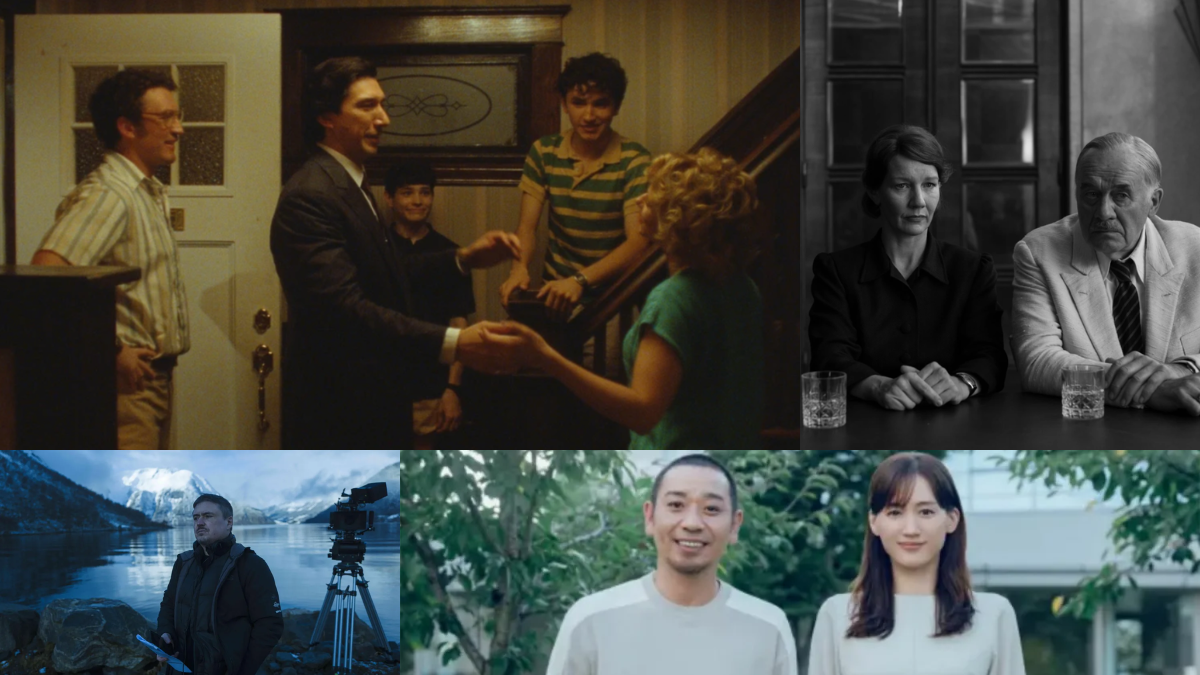
James Gray returns to the terrain he knows best: morally compromised men, fractured families and New York crime worlds simmering with dread. Set in 1980s Queens, Paper Tiger follows two brothers pulled into a dangerous deal involving the Russian mob, with Adam Driver, Scarlett Johansson and Miles Teller leading one of the festival’s most starry ensembles. Gray’s finest films have always treated crime less as genre machinery and more as inherited tragedy, and this sounds poised to continue that tradition.
‘All of a Sudden’
Few contemporary filmmakers understand emotional silence quite like Ryûsuke Hamaguchi. After the seismic success of Drive My Car, the Japanese auteur arrives at Cannes 2026 with a French-language drama centered on two intellectuals whose correspondence slowly evolves into something devastatingly intimate. With Virginie Efira and Tao Okamoto at its core, All of a Sudden already sounds like the kind of restrained, aching character study Hamaguchi has quietly mastered.
‘Teenage Sex and Death at Camp Miasma’
No title at Cannes 2026 announces itself with more chaotic confidence. Jane Schoenbrun follows the cult reverberations of I Saw the TV Glow with a blood-soaked meta-horror about a young filmmaker rebooting a failing slasher franchise alongside a reclusive scream queen played by Gillian Anderson. Hannah Einbinder co-stars in what promises to be part psychosexual nightmare, part industry satire, part queer fever dream. In other words: exactly the sort of madness Cannes thrives on.
‘Fatherland’
Paweł Pawlikowski’s cinema has always carried an extraordinary sense of emotional precision, and Fatherland looks no different. Set in postwar Germany, the black-and-white road drama follows writer Thomas Mann and his daughter Erika as they traverse a nation scarred by fascism and division. Sandra Hüller, currently in the midst of one of the most formidable runs any actor has had this decade, only heightens anticipation for what could become one of the festival’s quiet giants.
‘Fjord’
Cristian Mungiu making an English-language drama starring Sebastian Stan and Renate Reinsve already sounds like catnip for Cannes audiences. Set within a Romanian-Norwegian community rattled by suspicions of child abuse, Fjord appears primed to weaponize moral ambiguity in the way only Mungiu can. His films rarely offer easy judgments, and pairing that rigor with performers as emotionally magnetic as Stan and Reinsve feels almost unfairly enticing.
‘Ashes’
Diego Luna steps behind the camera once again for a migration drama following a young girl and her brother as they relocate from Mexico to Madrid in search of the future their mother promised them. What awaits, however, is a far harsher reality. Luna has always approached stories with deep humanism, whether acting or directing, and Ashes feels positioned to become one of Cannes’ most politically resonant emotional works.
‘Sheep in the Box’
Hirokazu Kore-eda tackling artificial intelligence through the lens of grief sounds almost unbearably emotional. Set in the near future, the film follows parents who receive a humanoid robot identical to their deceased child. Kore-eda has long explored the fragile architecture of family and memory, and this premise gives him terrifyingly fertile ground. In an era increasingly consumed by conversations around AI, few filmmakers feel more capable of approaching the subject with genuine tenderness.
‘Hope’
Na Hong-jin does not make ordinary thrillers. The filmmaker behind The Wailing returns with what begins as a suspected tiger attack near the Korean DMZ before spiraling into sci-fi horror territory. The cast alone is enough to generate frenzy, pairing Korean heavyweights with Alicia Vikander, Michael Fassbender and Taylor Russell. If history is any indication, Hope will likely begin in realism before detonating into something existentially horrifying.
‘Parallel Stories’
Asghar Farhadi thrives on narratives where morality collapses under observation, and Parallel Stories sounds deliciously built for that terrain. Isabelle Huppert stars as a novelist whose fascination with her neighbors begins bleeding into reality after she hires a young assistant played by Pierre Niney. Add Vincent Cassel and Virginie Efira to the equation and this could become one of the festival’s most elegantly twisted psychological dramas.
‘Titanic Ocean’
Professional mermaids, Japanese boarding schools, shark performances, first love, and pop-art surrealism – Titanic Ocean sounds gloriously unhinged in the best possible way. Konstantina Kotzamani’s coming-of-age fantasia follows a teenage girl navigating spectacle and transformation beneath the surface of a hyper-stylized aquatic world. Cannes has always had room for strange midnight obsessions and this already feels destined to become one of the festival’s most talked-about discoveries.
‘Bitter Christmas’
Pedro Almodóvar returns to Spanish-language filmmaking with a tragicomic meditation on art, grief, and creative cannibalism. Starring Bárbara Lennie and Leonardo Sbaraglia, Bitter Christmas reportedly blurs filmmaking and autofiction through a story involving writer-directors mining personal pain for material. Early reactions out of Spain have described it as one of Almodóvar’s rawest works in years, which is saying something for a filmmaker whose entire career has thrived on emotional exposure.
‘Colony’
Yeon Sang-ho is once again unleashing chaos through confined spaces. After reinventing zombie cinema with Train to Busan, the Korean filmmaker returns with a high-rise infection thriller where the afflicted evolve into something increasingly terrifying. But what made Train to Busan resonate was never just the horror; it was the humanity trapped inside it. If Colony can recapture even a fraction of that emotional devastation, Cannes audiences are in for a brutal ride this year.
Which Cannes 2026 title are you most excited to watch? Share your thoughts with us on X and Instagram. Visit Lyrical Muse for more festival coverage.
(All Images: Courtesy Cannes Film Festival)


Leave a Reply