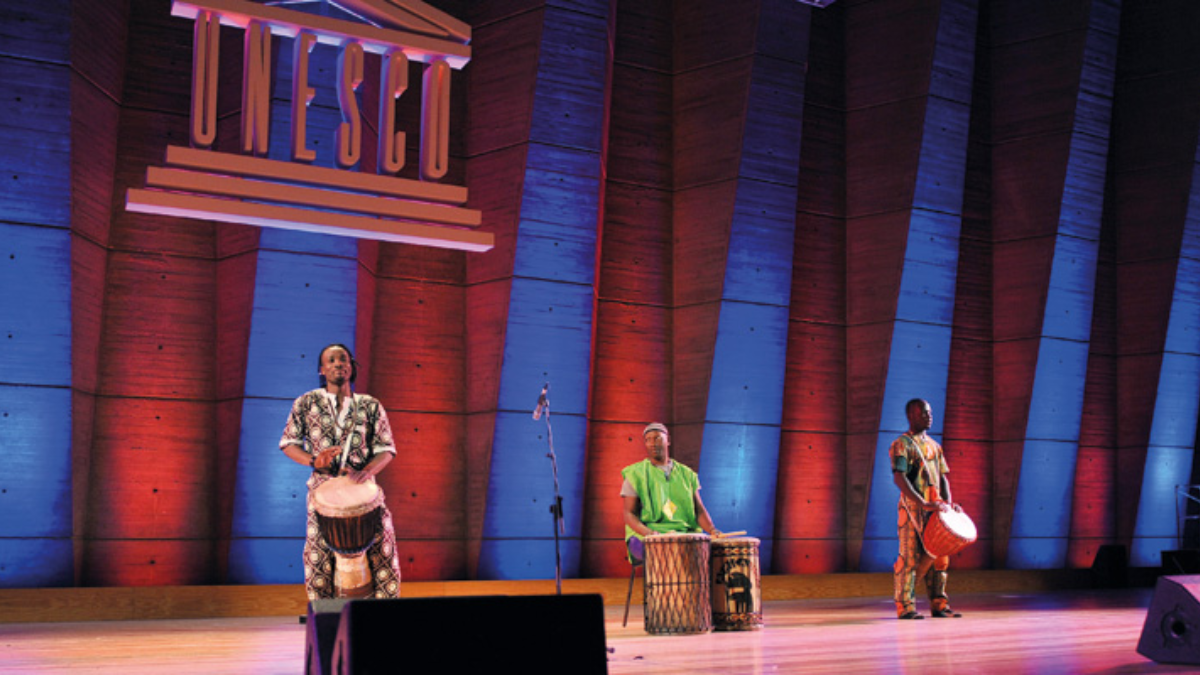
Every year on March 27, World Theatre Day celebrates the enduring power of live performance and storytelling. First observed in 1962 by the International Theatre Institute, the day recognises theatre as one of the most human forms of artistic expression — one that transcends language, geography, and culture.
The theme for World Theatre Day 2026: “Theatre and a Culture of Peace” – highlights the role of performance in fostering dialogue, empathy, and shared understanding.
In this year’s international message, American actor and theatre maker Willem Dafoe reflects on the deeper purpose of the stage, writing that “Theatre is not just performance—it is presence,” and reminding artists and audiences alike that great theatre challenges how we think and encourages us to imagine a better world.
From ritualistic storytelling traditions in Asia to musical and political theatre in Europe and Latin America, theatre continues to evolve while staying rooted in cultural identity.
Here are some of the most fascinating theatre forms around the world that define global performing arts today.
Noh Theatre (Japan)
One of the oldest surviving theatre traditions in the world, Noh theatre from Japan dates back to the 14th century. Known for its slow, poetic intensity and symbolic storytelling, Noh performances rely on minimal dialogue, stylized gestures, and carefully crafted masks.
Performed on simple wooden stages, Noh blends music, chanting, and dance or stylised body language to create deeply spiritual and atmospheric performances. Each tilt of the head, step across the stage, or movement of a fan carries meaning, creating an experience that feels meditative and spiritual.
Often accompanied by short comedic interludes known as Kyōgen, Noh reflects the Japanese philosophy of restraint, beauty and emotional depth through simplicity.

Kabuki Theatre (Japan)
If Noh is subtle and restrained, Kabuki Theatre is its dramatic and flamboyant counterpart. Emerging in the 17th century during Japan’s Edo period, Kabuki is known for elaborate costumes, bold makeup, stylised movements and grand storytelling.
Traditionally performed by all-male casts, Kabuki combines dance, music and drama in visually spectacular productions. The iconic kumadori makeup uses colour and patterns to represent character traits — red for strength and heroism, blue for villainy and gold for supernatural beings. Kabuki’s theatricality and visual richness make it one of the most recognisable performance traditions in the world.

Kathakali (India)
Originating in Kerala, Kathakali is one of India’s most visually striking theatre traditions. This classical dance-drama form blends storytelling, music, choreography and elaborate makeup to bring ancient epics like the Mahabharata and Ramayana to life.
Performers communicate entirely through facial expressions, hand gestures (mudras), and intense eye movements, turning the human body into a storytelling instrument. Traditionally performed in temple courtyards and lasting through the night, Kathakali represents the idea of “total theatre,” where dance, drama, and spirituality merge into a powerful cultural experience.

Chinese Opera (China)
Chinese Opera, or Xiqu (戏曲), is a thousand-year-old performance tradition that combines singing, acrobatics, martial arts and dance. It creates visually and emotionally rich performances, remaining one of the most influential theatre traditions in Asia.
Elaborate costumes and painted faces symbolise character traits — red for loyalty, black for courage, and white for cunning — allowing audiences to instantly understand roles and personalities.
Among its many forms, Peking Opera is the most internationally recognised, blending storytelling with highly stylised movement and musical expression to create a unique theatrical language.

Wayang Puppet Theatre (Indonesia)
Wayang, Indonesia’s traditional puppet theatre, transforms storytelling into a shadow-filled spectacle. Originating in Java and Bali, Wayang uses intricately carved leather or wooden puppets held against a lit screen, casting dramatic silhouettes for the audience.
The puppeteer, known as a dalang, controls the puppets, narrates the story, and directs the music, often performing through the night. Drawing heavily from the Ramayana and Mahabharata, Wayang blends mythology, folklore, and local cultural elements into an immersive theatrical experience that has been passed down through generations.

Sarsuwela (Philippines)
A powerful blend of music, drama, and social commentary, Sarsuwela is a unique Filipino theatre form shaped by colonial history and cultural transformation. Introduced during Spanish rule, it evolved into a distinctly Filipino performance style that combines spoken dialogue with songs and dance.
Often dealing with themes of identity, resistance, and social justice, Sarsuwela became a tool for cultural expression and political storytelling in the early 20th century. Though less widespread today, it remains an important part of the Philippines’ theatrical heritage and continues to be studied and revived in modern cultural spaces.

Yoruba Theatre (Nigeria)
Emerging in the 20th century, Yoruba Theatre blends traditional African storytelling with music, satire, and folklore. Rooted in the cultural practices of southwestern Nigeria, this theatre form combines mime, drumming, colourful costumes, and social commentary.
Yoruba theatre often explores everyday life, political issues, and moral dilemmas through humour and dramatic storytelling. It reflects the communal nature of African performance traditions, where theatre is not just entertainment but a mirror of society and a platform for dialogue.
Italian Opera (Italy)
Few theatre traditions have shaped Western performing arts as profoundly as Italian Opera. Originating in Florence in the 16th century, opera blends music, drama, and visual spectacle into emotionally powerful performances.
Through arias, recitatives, and orchestral compositions, opera tells grand stories of love, tragedy, and human struggle. Works by composers like Giacomo Puccini and Giuseppe Verdi continue to be performed globally, proving that opera remains a timeless form of theatrical storytelling that connects audiences through music and emotion.

Musical Theatre (Global Influence)
From New York’s Broadway to London’s West End, Musical Theatre has become one of the most widely recognised forms of modern performance. Combining dialogue, song, and choreography, musical theatre turns storytelling into an immersive emotional experience.
Unlike traditional opera, musical theatre often focuses on contemporary themes and accessible narratives, making it popular with global audiences. Its influence has spread across continents, shaping theatre productions in Asia, Europe, and beyond, and proving that theatre can evolve while still maintaining its core purpose — telling human stories through performance.

Theatre of the Oppressed (Brazil)
Developed by Brazilian theatre director Augusto Boal, Theatre of the Oppressed transforms audiences into active participants in the performance. Instead of watching passively, viewers engage with actors to discuss social issues such as inequality, discrimination, and political injustice. The goal is not just storytelling but social change.
This interactive theatre form challenges traditional performance structures and reinforces the idea that theatre can be a tool for dialogue and transformation. It also embodies the very spirit of World Theatre Day—using art to inspire understanding and social transformation.

The stage as a shared human space…
As World Theatre Day 2026 reminds us, theatre continues to be one of the few art forms that brings people together in real time. Whether through the quiet symbolism of Japanese Noh, the grandeur of Italian opera or the social activism of Brazilian theatre, each tradition each tradition reflects the stories and values of its people.
As Willem Dafoe writes in this year’s message, theatre remains a space of presence, connection, and collective imagination — one that challenges us to listen, reflect, and see the world through someone else’s story. And in an era dominated by digital screens, that shared human experience may be theatre’s most powerful performance of all.
And that is precisely why theatre still matters.
Love global culture and performing arts? Follow Lyrical Muse for more deep dives into theatre and world culture, and share our thoughts with us on Instagram and X.


Leave a Reply